
XPEL Window Tinting Near Me searches often lead to two film names: XPEL PRIME XR PLUS and XPEL PRIME CS. Both can darken automotive glass, reduce glare, and block UV rays, but they are built for different levels of heat performance.
That difference matters for Bay Area drivers.
A vehicle sitting outside in Fremont, CA can spend hours receiving direct sunlight through the windshield, doors, rear glass, and roof glass. The same thing happens while commuting through Newark, CA, Union City, CA, San Jose, CA, or other nearby communities.
If keeping more solar heat out of the cabin is one of your goals, choosing window film only by how dark it looks can lead you in the wrong direction.
XPEL PRIME CS is a color-stable dyed window film.
XPEL PRIME XR PLUS is XPEL’s multi-layer nano-ceramic window film.
XPEL currently rates PRIME XR PLUS at up to 96% infrared rejection and up to 70% infrared energy rejection. PRIME CS is rated at up to 35% infrared rejection and up to 32% infrared energy rejection.
Both lines block 99% of harmful UV rays.
XCare Auto Films installs XPEL PRIME XR PLUS from our Fremont, CA shop at 45277 Fremont Blvd STE 7, Fremont, CA 94538. We are XPEL certified and an XPEL vendor.
If you are comparing XPEL tint options, here is what separates PRIME XR PLUS from PRIME CS.
Table of Contents
- What Is XPEL PRIME Window Tint?
- What Is XPEL PRIME CS?
- What Is XPEL PRIME XR PLUS?
- PRIME XR PLUS vs PRIME CS at a Glance
- How Much Infrared Heat Does Each Film Reject?
- Why Infrared Energy Rejection Matters
- Does Darker Tint Mean Better Heat Rejection?
- How PRIME XR PLUS and PRIME CS Compare at Similar Shades
- Do Both XPEL Films Block UV Rays?
- What About Glare Reduction?
- What Is VLT?
- Which Film Makes More Sense for Bay Area Heat?
- Which Film Makes More Sense for Appearance?
- Does XPEL Window Tint Affect Electronics?
- What About Tesla Window Tint?
- Should You Tint the Windshield?
- How to Choose an XPEL Window Tint Installer
- Schedule XPEL Window Tint With XCare Auto Films
- Frequently Asked Questions
What Is XPEL PRIME Window Tint?
XPEL PRIME is XPEL’s automotive window-film family.
The current lineup includes several film technologies with different solar-performance characteristics.
For shoppers searching XPEL Window Tinting Near Me, two names commonly worth comparing are:
- XPEL PRIME CS
- XPEL PRIME XR PLUS
Both are automotive films.
Both are offered in multiple visible-light transmission levels.
Both block 99% of harmful UV rays according to XPEL.
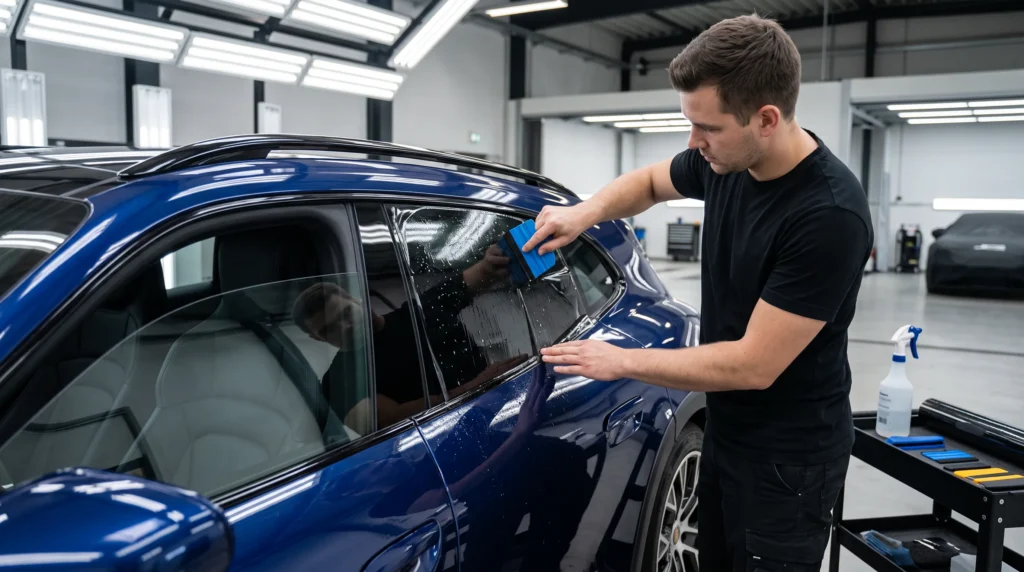
The biggest difference is how the films are constructed and how they handle infrared energy.
That can change how much solar heat reaches the cabin through treated glass.
What Is XPEL PRIME CS?
XPEL PRIME CS is a color-stable dyed automotive window film.
Dyed film changes the amount of visible light entering the vehicle and can reduce glare while giving the glass a darker appearance.
XPEL currently lists PRIME CS with:
- Up to 35% infrared rejection
- Up to 32% infrared energy rejection
- 99% UV rejection
- Up to 95% glare reduction
- Color-stable dyed construction
PRIME CS may appeal to someone who wants a darker appearance, glare reduction, UV blocking, and a conventional dyed-film construction.
Its published infrared performance is lower than PRIME XR PLUS.
That distinction becomes more noticeable when cabin heat is a major reason for tinting the vehicle.
What Is XPEL PRIME XR PLUS?
XPEL PRIME XR PLUS is a multi-layer nano-ceramic automotive window film.
It is the XPEL film XCare Auto Films carries for ceramic window tint.
XPEL currently lists PRIME XR PLUS with:
- Up to 96% infrared rejection
- Up to 70% infrared energy rejection
- 99% UV rejection
- Up to 95% glare reduction
- Multi-layer nano-ceramic construction
This makes XR PLUS the stronger performer of the two when comparing XPEL’s published infrared figures.
Ceramic construction also lets owners choose from several VLT levels without treating darkness as the sole measure of solar performance.
That is one reason drivers searching XPEL Window Tinting Near Me often end up comparing XR PLUS with more conventional film.
PRIME XR PLUS vs PRIME CS at a Glance
Here is a simplified comparison based on XPEL’s current published product information.
| Feature | XPEL PRIME CS | XPEL PRIME XR PLUS |
|---|---|---|
| Film construction | Color-stable dyed | Multi-layer nano-ceramic |
| Infrared rejection | Up to 35% | Up to 96% |
| Infrared energy rejection | Up to 32% | Up to 70% |
| UV rejection | 99% | 99% |
| Glare reduction | Up to 95% | Up to 95% |
| Multiple shade choices | Yes | Yes |
| Strong focus on cabin heat | Moderate | Higher |
| XCare Auto Films choice | Ask shop about availability | Installed by XCare Auto Films |
The published performance changes by shade, so the exact film specification matters.
Do not assume every PRIME CS or XR PLUS shade has one identical TSER or VLT figure.
How Much Infrared Heat Does Each Film Reject?
This is where the difference between PRIME CS and PRIME XR PLUS becomes clearer.
XPEL’s current PRIME comparison gives PRIME CS a maximum infrared rejection figure of 35%.
PRIME XR PLUS reaches a stated maximum of 96%.
XPEL also publishes infrared energy rejection, or IRER.
That figure takes absorbed and re-radiated infrared energy into account across the stated test range.
XPEL lists:
- PRIME CS: up to 32% IR energy rejection
- PRIME XR PLUS: up to 70% IR energy rejection
For a driver focused on reducing the intensity of sunlight through treated glass, these figures deserve more attention than tint darkness alone.
Why Infrared Energy Rejection Matters
Visible light and infrared energy are not the same thing.
Visible light controls how bright or dark the view through the film appears.
Infrared energy contributes to the heat you feel through the glass.
A film can reduce visible light without rejecting infrared energy at the same level as a ceramic film.
This is why XPEL Window Tinting Near Me should not turn into a conversation that only asks:
“What percentage tint do you want?”
A better discussion includes:
- VLT
- Infrared rejection
- IR energy rejection
- UV rejection
- TSER
- Which windows are being treated
- How much nighttime visibility you want
- How much direct sunlight your vehicle receives
Those measurements tell you more about how the film is expected to perform.
Does Darker Tint Mean Better Heat Rejection?
No.
A darker-looking window lets less visible light through.
That does not automatically mean it rejects more infrared energy than a lighter ceramic film.
This distinction is easy to see in XPEL’s own specification data.
PRIME CS BLACK 5 has a very dark 5% VLT rating.
XPEL’s published specification sheet lists its IRER at 11%.
PRIME XR PLUS 55 is much lighter, with a published VLT of 57%.
Its listed IRER is 70%.
So the much lighter XR PLUS film has far stronger published infrared-energy performance than the very dark CS example.
That is why choosing tint based only on appearance can be misleading when heat is your concern.
How PRIME XR PLUS and PRIME CS Compare at Similar Shades
Looking at films with similar visible-light levels gives you another useful comparison.
Around the 30% Range
XPEL lists:
PRIME CS BLACK 30
- 32% VLT
- 36% TSER
- 11% IRER
- 99% UV rejection
- 65% glare reduction
PRIME XR PLUS 30
- 31% VLT
- 61% TSER
- 70% IRER
- 99% UV rejection
- 66% glare reduction
The two films let through almost the same amount of visible light.
Their published solar-performance numbers are very different.
That is one of the clearest demonstrations of why ceramic construction matters.
Around the Mid-30% Range
XPEL lists PRIME CS BLACK 35 at 34% VLT and PRIME XR PLUS 35 at 38% VLT.
Again, the ceramic XR PLUS product carries much stronger published IRER.
For someone researching XPEL Window Tinting Near Me because heat is the concern, these like-for-like shade comparisons are more useful than simply looking at film samples.
Do Both XPEL Films Block UV Rays?
Yes.
XPEL lists 99% UV rejection for both PRIME CS and PRIME XR PLUS.
That means ceramic film does not hold an exclusive advantage in this category within these two XPEL lines.
UV blocking can help reduce exposure through treated automotive glass and can help protect vehicle interior materials from repeated UV exposure.
Seats, dashboards, door panels, and other interior surfaces all spend time under sunlight.
Still, coverage matters.
Film on rear doors cannot block radiation entering through an untreated front windshield.
Think about which windows are being treated when planning the job.
What About Glare Reduction?
Both films can reduce glare, and the exact amount changes with VLT.
Darker shades reduce more visible light, which can make bright daytime conditions easier on the eyes.
XPEL lists glare reduction figures as high as 95% for its darkest CS and XR PLUS options.
There is a tradeoff.
A very dark film also lets less visible light through at night.
Drivers who spend time on poorly lit roads may prefer a lighter shade.
The goal is not to choose the darkest film simply because it produces the biggest glare-reduction figure.
Choose a VLT that fits your visibility needs and the windows being treated.
What Is VLT?
VLT stands for visible light transmittance.
The percentage tells you how much visible light passes through the film under the stated test conditions.
A higher percentage means more visible light gets through.
A lower percentage means the film appears darker.
XPEL’s published PRIME XR PLUS options include several VLT levels, such as:
- XR PLUS 5
- XR PLUS 15
- XR PLUS 20
- XR PLUS 30
- XR PLUS 35
- XR PLUS 45
- XR PLUS 55
XPEL also offers CS in several shades.
One thing to remember is that the film’s published VLT and the final measurement of the installed vehicle window are not always identical.
Factory automotive glass already affects light transmission.
Once film is added, the finished glass-and-film combination has its own VLT.
That is worth discussing with your installer, especially for windows subject to California tint restrictions.
Which Film Makes More Sense for Bay Area Heat?
If cabin heat is near the top of your list, PRIME XR PLUS has the stronger published performance.
Consider how Bay Area vehicles are used.
A driver may:
- Park outside at work
- Commute during afternoon sun
- Sit in I-880 traffic
- Travel on I-680
- Cross the Dumbarton Bridge
- Spend long periods in stop-and-go traffic
- Drive an EV with large glass areas
- Carry children or passengers in the rear seats
Direct sunlight can enter through one side of the vehicle for a long portion of a commute.
Ceramic film can reduce the infrared energy entering through treated windows.
It cannot make a parked car stay cold.
A closed vehicle sitting in direct sunlight will still warm up.
The benefit is reducing part of the solar load entering through the glass.
For Bay Area drivers who care strongly about heat, XR PLUS is the film to compare closely.
Which Film Makes More Sense for Appearance?
If your goal is mostly appearance, the conversation becomes different.
PRIME CS can give glass a darker, color-stable look while still providing UV protection and glare reduction.
PRIME XR PLUS can also provide dark shades, but the reason many people choose it is the stronger infrared performance.
Ask yourself what matters more:
- Darker appearance
- Rear-seat privacy where permitted
- Glare reduction
- UV blocking
- Infrared heat rejection
- Cabin comfort
- Night visibility
There is no reason to pay attention to a performance number you do not care about.
But if heat is one of the reasons you are tinting, compare the film specifications before choosing.
Does XPEL Window Tint Affect Electronics?
Modern vehicles depend on electronic signals for many everyday functions.
Drivers commonly use:
- Cellular service
- Bluetooth
- GPS
- Vehicle connectivity
- Navigation
- Wireless devices
XPEL describes its automotive films as designed without the signal-interference problems associated with some metallized window films.
PRIME XR PLUS uses nano-ceramic technology rather than a metallic film construction.
That can matter for modern connected vehicles and EVs.
What About Tesla Window Tint?
Tesla owners frequently search XPEL Window Tinting Near Me because Model 3, Model Y, Model S, and Model X vehicles have large glass areas.
The same PRIME XR PLUS vs PRIME CS comparison still applies.
Ceramic film can be especially appealing when the owner is focused on infrared heat coming through side glass.
A Tesla tint discussion may include:
- Front side windows
- Rear side windows
- Rear glass
- Roof glass where suitable
- Windshield questions
California law treats these areas differently, so film shade should be chosen by window location as well as appearance.
XCare Auto Films offers Tesla Window Tint using XPEL window film.
Should You Tint the Windshield?
The windshield is one of the largest glass surfaces on many vehicles, so it is natural for drivers focused on heat to ask about it.
California places stricter rules on windshield film than on rear side glass.
Do not assume that a clear-looking or light ceramic film can automatically be installed across the entire windshield legally.
Review the current law and discuss the window with an installer before choosing film.
XCare Auto Films has a dedicated Windshield Tinting page where you can learn more about the service.
The same performance lesson still applies: light appearance does not automatically mean weak infrared rejection.
How to Choose an XPEL Window Tint Installer
When searching XPEL Window Tinting Near Me, verify more than the shop’s distance from your home.
Ask:
- Are you listed as an XPEL installer?
- Which PRIME film are you installing?
- Is it PRIME CS, XR, or XR PLUS?
- What VLT is being used?
- What are the published IR and IRER figures?
- Which windows are included?
- What warranty applies?
- How should I care for the film after installation?
- Can I see samples before choosing a shade?
- Does the quote identify the exact XPEL film?
XPEL maintains an installer locator where customers can search for authorized installers.
XPEL’s current San Francisco-Oakland-Fremont installer directory lists XCare Auto Films and shows PRIME Automotive Window Tint among the products offered at our shop.
That gives customers an outside source for checking our relationship with XPEL.
Why XCare Auto Films Uses PRIME XR PLUS
XCare Auto Films carries XPEL PRIME XR PLUS because many Bay Area customers are looking for more than dark windows.
They want heat performance.
XR PLUS gives us a ceramic film with published data for:
- VLT
- TSER
- Infrared rejection
- IR energy rejection
- UV rejection
- Glare reduction
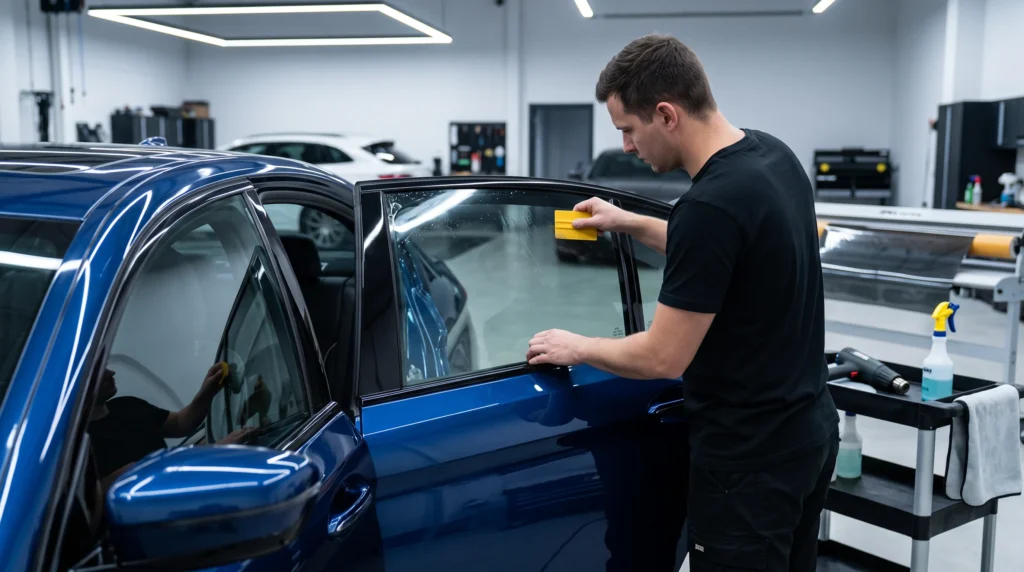
That lets customers compare measurable film characteristics before selecting a shade.
Our Fremont, CA location also lets drivers combine window tint with other XPEL vehicle-protection services.
Those can include:
Schedule XPEL Window Tint With XCare Auto Films
If you are searching XPEL Window Tinting Near Me, XCare Auto Films installs XPEL PRIME XR PLUS at our Fremont, CA shop.
Our location is:
XCare Auto Films
45277 Fremont Blvd STE 7
Fremont, CA 94538
Phone: (510) 993-9833
Hours: Monday through Friday, 11 AM to 7 PM
We are XPEL certified and an XPEL vendor.
We serve vehicle owners from Fremont, CA, Newark, CA, Union City, CA, and surrounding Bay Area communities.
Call (510) 993-9833 or use our contact page to schedule an appointment.
You can also review:
- Ceramic Window Tint
- Window Tint
- Windshield Tinting
- Tesla Window Tint
- Window Tint Deals
- Contact XCare Auto Films
Bottom line, PRIME CS and PRIME XR PLUS can both tint automotive glass, block 99% of harmful UV rays, and reduce glare.
Their biggest difference is infrared performance.
PRIME CS uses color-stable dyed film technology and XPEL rates it at up to 35% infrared rejection.
PRIME XR PLUS uses multi-layer nano-ceramic technology and reaches up to 96% infrared rejection under XPEL’s published measurement.
If appearance and UV protection are your main concerns, CS gives you those characteristics.
If reducing infrared heat through treated glass carries more weight, XR PLUS offers much stronger published performance.
When comparing XPEL Window Tinting Near Me, ask for the exact film name rather than accepting a quote that only says “XPEL tint.”
Frequently Asked Questions
1. What is the difference between XPEL PRIME XR PLUS and PRIME CS?
PRIME CS is XPEL’s color-stable dyed automotive window film. PRIME XR PLUS uses multi-layer nano-ceramic technology. XPEL currently lists XR PLUS with much higher infrared and infrared-energy rejection than CS, while both lines block 99% of harmful UV rays.
2. Which XPEL tint rejects more heat?
XPEL currently rates PRIME XR PLUS at up to 96% infrared rejection and up to 70% infrared energy rejection. PRIME CS is listed at up to 35% infrared rejection and up to 32% infrared energy rejection.
3. Does PRIME XR PLUS need to be very dark to reject heat?
No. XPEL’s specifications show strong infrared performance across several XR PLUS VLT choices. Film darkness measures visible-light transmission and should not be used as the sole measure of heat performance.
4. Does PRIME CS still block UV rays?
Yes. XPEL currently lists PRIME CS with 99% UV rejection, the same listed UV-rejection percentage as PRIME XR PLUS.
5. Is PRIME XR PLUS ceramic tint?
Yes. XPEL describes PRIME XR PLUS as a multi-layer nano-ceramic automotive window film. XCare Auto Films uses PRIME XR PLUS for our ceramic window tint service.
6. Does XCare Auto Films install XPEL window tint?
Yes. XPEL’s current installer directory lists XCare Auto Films at 45277 Fremont Blvd STE 7, Fremont, CA 94538 and lists PRIME Automotive Window Tint among the products offered. Call (510) 993-9833 to discuss your vehicle.
7. Where can I schedule XPEL Window Tinting Near Me in Fremont, CA?
XCare Auto Films installs XPEL PRIME XR PLUS at 45277 Fremont Blvd STE 7, Fremont, CA 94538. Call (510) 993-9833 or use our contact page to schedule an appointment.
Sources
- XPEL PRIME Window Tint
Publisher: XPEL
Publication Date: Not stated
URL: https://lp.xpel.com/xpel-prime-window-tint - XPEL Automotive Window Tint
Publisher: XPEL
Publication Date: Not stated
URL: https://www.xpel.com/products/automotive-window-tint - XPEL PRIME USA Specification Sheet
Publisher: XPEL
Publication Date: Revision May 2023
URL: https://www.xpel.com/web-assets/downloads/XPEL_PRIME_spec_sheet_USA_Rev0523.pdf - XPEL Product Specifications
Publisher: XPEL
Publication Date: Not stated
URL: https://www.xpel.com/product-specifications - XPEL Installers: San Francisco-Oakland-Fremont
Publisher: XPEL
Publication Date: Not stated
URL: https://www.xpel.com/installers/United_States/California/San_Francisco-Oakland-Fremont