
Ceramic Window Tint vs Standard Tint is one of the first comparisons Bay Area drivers make when they want a cooler cabin without choosing film based on darkness alone. Both types of automotive window film can change the amount of visible light entering a vehicle, but their ability to manage infrared heat can be very different.
That difference matters in Fremont, CA and throughout the Bay Area.
A vehicle may sit in direct sunlight for hours before the afternoon commute. Drivers traveling through Fremont, CA, Newark, CA, Union City, CA, San Jose, CA, or other Bay Area communities can also spend long periods in traffic with sunlight entering through the side glass.
Dark-looking windows do not automatically mean strong heat rejection.
Film technology matters.
For a clear comparison, this article uses XPEL PRIME CS as an example of conventional color-stable dyed window film and XPEL PRIME XR PLUS as an example of ceramic window film.
XPEL currently reports up to 35% infrared rejection for PRIME CS and up to 96% infrared rejection for PRIME XR PLUS. Both product lines are listed with 99% UV rejection.
XCare Auto Films installs XPEL PRIME XR PLUS ceramic window tint at 45277 Fremont Blvd STE 7, Fremont, CA 94538. We are XPEL certified and an XPEL vendor.
If cabin heat is your main reason for tinting your vehicle, here is what you should know before choosing a film.
Table of Contents
- What Is Standard Automotive Window Tint?
- What Is Ceramic Window Tint?
- Ceramic Window Tint vs Standard Tint at a Glance
- Why Ceramic Tint Rejects More Infrared Heat
- Why Darker Tint Does Not Always Mean Better Heat Rejection
- What Is Infrared Rejection?
- What Is Total Solar Energy Rejection?
- How XPEL PRIME CS and XR PLUS Compare
- Does Ceramic Window Tint Block UV Rays?
- Ceramic Tint and Bay Area Commutes
- Does Ceramic Tint Help After a Car Has Been Parked in the Sun?
- Ceramic Window Tint and Visibility
- Does Ceramic Tint Interfere With Electronics?
- What About California Tint Laws?
- Which Window Tint Is Better for Your Vehicle?
- Schedule Ceramic Window Tint With XCare Auto Films
- Frequently Asked Questions
What Is Standard Automotive Window Tint?
When comparing Ceramic Window Tint vs Standard Tint, it helps to define what “standard tint” means.
There is no single product universally called standard automotive tint.
Shops may use that phrase for dyed film, entry-level film, carbon-style film, or whatever base product they carry.
For this comparison, we are using XPEL PRIME CS as the conventional tint reference.
XPEL describes PRIME CS as a color-stable dyed film.
Dyed window film changes the appearance of the glass and reduces visible light entering the cabin. It can also reduce glare, block UV rays, and reject some solar heat.
XPEL currently lists PRIME CS with:
- Up to 35% infrared rejection
- Up to 32% infrared energy rejection
- 99% UV rejection
- Up to 95% glare reduction
- Color-stable dyed film construction
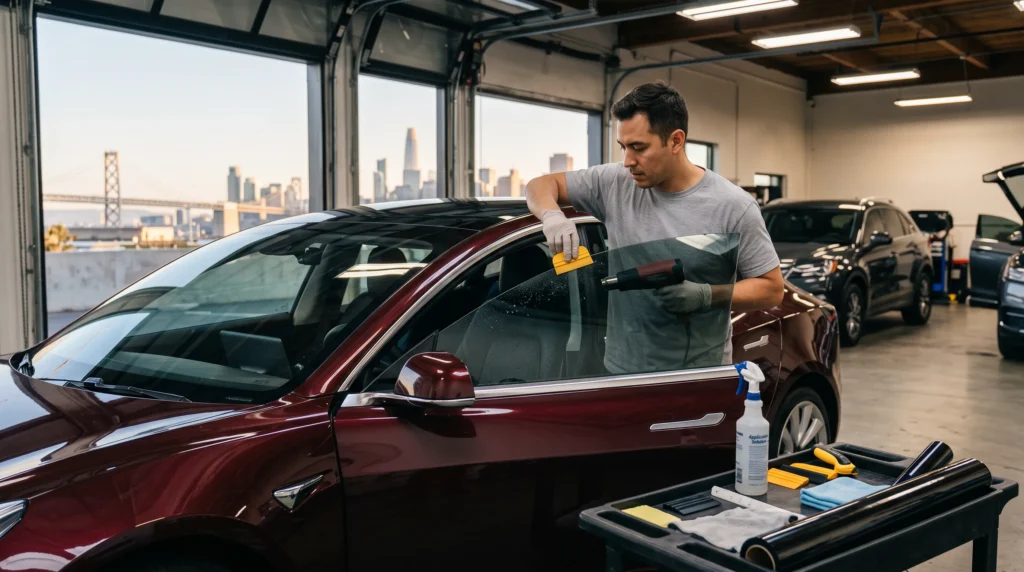
That can be a suitable choice for someone whose main goals are appearance, privacy where legally permitted, glare reduction, and UV protection.
Heat rejection is where ceramic film begins to separate itself.
What Is Ceramic Window Tint?
Ceramic automotive tint uses ceramic particles within the film rather than relying only on dye to manage solar energy.
XCare Auto Films installs XPEL PRIME XR PLUS, which XPEL describes as a multi-layer nano-ceramic film.
XPEL currently lists PRIME XR PLUS with:
- Up to 96% infrared rejection
- Up to 70% infrared energy rejection
- 99% UV rejection
- Up to 95% glare reduction
- Multi-layer nano-ceramic construction
The ceramic construction is aimed at controlling infrared energy while still allowing drivers to choose from several visible-light transmission levels.
This is one of the biggest differences in the Ceramic Window Tint vs Standard Tint discussion.
You can select a ceramic film for heat performance without assuming you need the darkest shade available.
Learn more about our ceramic window tint service.
Ceramic Window Tint vs Standard Tint at a Glance
Here is a direct comparison using XPEL’s current published figures for PRIME CS and PRIME XR PLUS.
| Feature | XPEL PRIME CS | XPEL PRIME XR PLUS |
|---|---|---|
| Film type | Color-stable dyed film | Multi-layer nano-ceramic film |
| Infrared rejection | Up to 35% | Up to 96% |
| Infrared energy rejection | Up to 32% | Up to 70% |
| UV rejection | 99% | 99% |
| Glare reduction | Up to 95% | Up to 95% |
| Electronic signal interference | None listed by XPEL | None listed by XPEL |
| Main reason to choose | Appearance, UV, glare, lower entry point | Stronger heat rejection plus UV and glare control |
Published figures vary by shade.
This means two films that appear similarly dark can perform differently when exposed to infrared energy.
That is one reason Ceramic Window Tint vs Standard Tint should be compared through technical specifications rather than appearance alone.
Why Ceramic Tint Rejects More Infrared Heat
Sunlight reaching a vehicle contains several forms of energy.
Visible light is the part you see.
Infrared energy is associated with much of the heat you feel coming through the glass.
UV radiation is another part of the spectrum and is connected with skin and material exposure.
Window film can interact with these parts differently.
A conventional dyed film can reduce visible light and absorb some solar energy.
A ceramic film is designed to manage much more infrared energy.
XPEL’s published figures show the difference clearly.
PRIME CS reaches up to 35% infrared rejection.
PRIME XR PLUS reaches up to 96%.
That gap is why a lighter-looking ceramic film may still provide strong heat performance compared with a darker conventional film.
Why Darker Tint Does Not Always Mean Better Heat Rejection
This is one of the most useful things to know when researching Ceramic Window Tint vs Standard Tint.
Tint darkness is usually discussed using VLT.
VLT stands for visible light transmittance.
A lower VLT allows less visible light through the film.
A higher VLT allows more visible light through.
A 20% VLT film appears much darker than a 70% VLT film.
That tells you about visible light.
It does not tell you the full infrared story.
XPEL’s published PRIME data shows that different ceramic shades can maintain high infrared rejection even as visible-light transmission changes.
That means choosing a very dark conventional film solely because you want less heat may not give you the heat performance you expected.
When heat is your concern, compare the infrared figures too.
What Is Infrared Rejection?
Infrared rejection measures how much infrared energy the film can reject within a stated wavelength range.
You may see abbreviations such as:
- IR
- IRR
- IRER
Be careful when comparing numbers from different manufacturers.
Testing methods and wavelength ranges can differ.
A 95% figure from one test is not automatically equal to a 95% figure measured under another test method.
The safest comparison is between films from the same manufacturer using the same published test structure.
XPEL’s current PRIME specification sheet gives data for its film lines using defined testing methods, which makes CS, XR, and XR PLUS easier to compare.
For Bay Area drivers focused on cabin comfort, these infrared figures can tell you more than shade alone.
What Is Total Solar Energy Rejection?
Another number you may see while comparing Ceramic Window Tint vs Standard Tint is TSER.
TSER means Total Solar Energy Rejected.
This looks at a broader portion of solar energy rather than only a narrow infrared measurement.
XPEL’s PRIME specification sheet lists TSER values by product and shade.
Take PRIME XR PLUS as an example.
Its current specification sheet lists TSER figures that change with VLT.
The darker XR PLUS 5 is listed at 71% TSER, while lighter options have different figures.
This is why a detailed film comparison should look at several numbers rather than relying on a single marketing percentage.
Useful specifications include:
- VLT
- TSER
- Infrared rejection
- UV rejection
- Glare reduction
Together, these measurements give you a better picture of how a film behaves.
How XPEL PRIME CS and XR PLUS Compare
Let’s break down Ceramic Window Tint vs Standard Tint using two shades from XPEL’s published specification sheet.
The exact film you choose may be different, but the comparison shows why construction matters.
XPEL PRIME CS
PRIME CS uses dyed film technology.
XPEL lists the CS line as providing:
- 99% UV rejection
- Up to 35% infrared rejection
- Up to 32% infrared energy rejection
- Glare reduction based on shade
- No listed signal interference
For someone focused mainly on tint appearance and UV blocking, PRIME CS can address those goals.
XPEL PRIME XR PLUS
PRIME XR PLUS uses multi-layer nano-ceramic technology.
XPEL’s published sheet lists XR PLUS shades with infrared rejection figures in the 90% range under its specified IR measurement.
Its current product comparison lists the line at up to 96% infrared rejection and up to 70% infrared energy rejection.
That is a large reason ceramic film appeals to drivers who spend long periods in direct sunlight.
Does Ceramic Window Tint Block UV Rays?
Yes.
XPEL states that its PRIME automotive window films block 99% of harmful UV rays.
That includes both PRIME CS and PRIME XR PLUS.
This is a case where Ceramic Window Tint vs Standard Tint may not show a large difference if both products already carry strong published UV rejection.
UV protection can help reduce exposure through treated glass and help protect interior materials from repeated sunlight.
Areas that receive regular sun exposure can include:
- Seats
- Dashboard
- Door panels
- Interior trim
- Steering wheel surfaces
Remember that the amount of vehicle glass covered matters.
Tint on the side windows does not provide coverage through an untreated windshield.
Ceramic Tint and Bay Area Commutes
Bay Area driving involves more than the temperature shown in a weather app.
Your position inside the vehicle matters.
Sunlight can hit the driver through the side glass for long periods while moving through slow traffic.
Drivers traveling around Fremont, CA may spend time on:
- I-880
- I-680
- Mission Boulevard
- Auto Mall Parkway
- Dumbarton Bridge approaches
- Local surface streets
Drivers coming from Newark, CA or Union City, CA can face the same exposure while traveling through the East Bay.
Ceramic film can reduce the infrared energy entering through the treated glass.
That can make a noticeable difference in how intense direct sunlight feels against your arms, face, seats, and interior surfaces.
This is where the Ceramic Window Tint vs Standard Tint decision becomes practical rather than technical.
If you spend a lot of time driving in sunlight, heat rejection may matter more than simply changing how dark the vehicle looks.
Does Ceramic Tint Help After a Car Has Been Parked in the Sun?
Ceramic tint can reduce solar energy entering through treated windows, but it cannot stop a parked vehicle from becoming hot.
A closed vehicle sitting in direct sun will still heat up.
Heat can enter and build through:
- Windshield
- Side windows
- Rear glass
- Roof glass
- Vehicle body panels
Window tint reduces part of that solar load.
It does not create air conditioning while the vehicle is parked.
This distinction matters when discussing Ceramic Window Tint vs Standard Tint.
Ceramic tint can reduce incoming infrared energy much more strongly than many conventional dyed films, but it should not be described as a way to keep a parked vehicle cold.
The cabin can still become hot.
Ceramic Window Tint and Visibility
Ceramic does not automatically mean dark.
XPEL offers PRIME XR PLUS in multiple VLT levels.
Its published specification sheet includes XR PLUS options ranging from dark 5% film to lighter 70% film.
This gives drivers more room to select appearance and visible-light transmission separately from the film’s ceramic construction.
Nighttime visibility should still be considered.
A very dark film allows much less visible light through, regardless of whether that film is ceramic or dyed.
If you regularly drive on poorly lit roads, shade selection deserves thought.
Ceramic technology does not cancel the visibility effect of low VLT.
Does Ceramic Tint Interfere With Electronics?
Metal-containing films have historically raised concerns about electronic signals.
XPEL currently lists no signal interference for PRIME CS, PRIME XR, and PRIME XR PLUS in its product comparison.
For modern vehicles, this can matter because drivers regularly use:
- Mobile phones
- GPS
- Bluetooth devices
- Connected vehicle functions
- Toll systems
XPEL’s ceramic construction gives owners strong heat rejection without relying on a metallic film layer that could raise signal concerns.
What About California Tint Laws?
Film performance and legal shade are separate questions.
A film can have strong heat rejection and still be unsuitable for a particular window if the finished glass does not meet California requirements.
California Vehicle Code Section 26708 places stricter limits on the windshield and the two front side windows than it does on windows behind the driver.
For qualifying front-side material, California law requires the material itself to have at least 88% visible light transmittance, and the completed glass-and-film combination must meet the federal 70% light-transmittance requirement.
This is another place where ceramic film can be useful.
A driver concerned with heat may be able to discuss lighter ceramic-film choices rather than assuming that strong heat rejection requires very dark glass.
Review our ceramic window tint service and windshield tinting service before choosing film.
Always confirm current California requirements for the exact window being tinted.
Which Window Tint Is Better for Your Vehicle?
The answer to Ceramic Window Tint vs Standard Tint depends on what you care about most.
Standard Dyed Tint May Fit If You Want:
- A darker appearance
- UV blocking
- Glare reduction
- Privacy where legally permitted
- A conventional film construction
Ceramic Tint May Fit If You Want:
- Stronger infrared heat rejection
- UV blocking
- Glare reduction
- Several shade choices
- Strong heat performance without choosing only by darkness
- Nonmetallic film construction
- No listed signal interference
For Bay Area drivers, ceramic film often gets attention because cabin heat can be a bigger concern than tint appearance alone.
The real question is what you expect the film to do.
If you mainly want darker rear windows, the decision may be different.
If you spend hours commuting with the sun hitting one side of the vehicle, infrared rejection may carry much more weight.
Why XCare Auto Films Uses XPEL PRIME XR PLUS
XCare Auto Films installs XPEL PRIME XR PLUS ceramic window tint.
We chose to offer a ceramic film that gives customers published data for:
- VLT
- UV rejection
- Infrared rejection
- TSER
- Glare reduction
That makes it easier to discuss film based on measurable characteristics rather than saying one tint “feels better.”
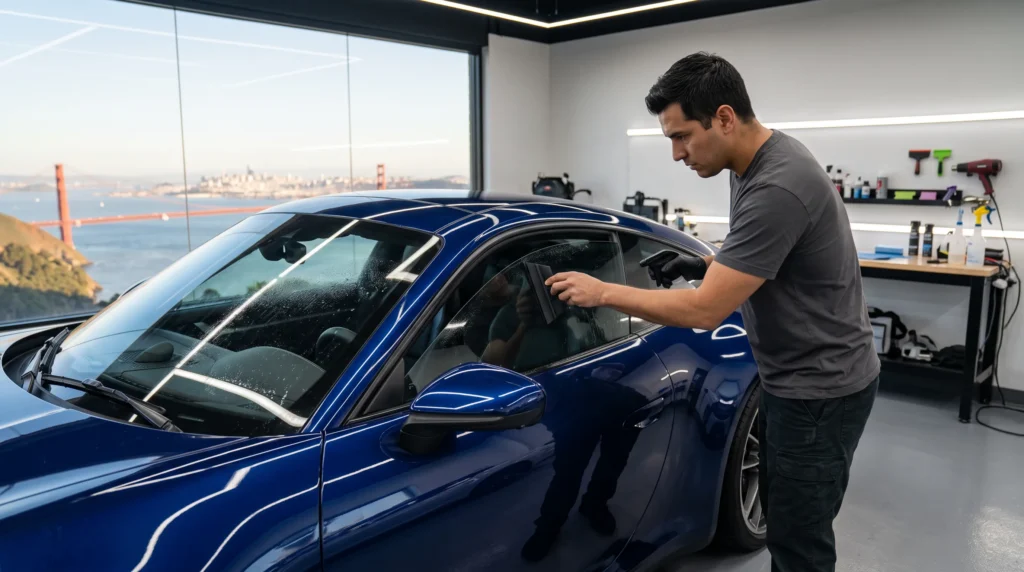
Our team can review the vehicle glass, the windows you want treated, your preferred appearance, and California tint requirements before installation.
You can learn more about:
Schedule Ceramic Window Tint With XCare Auto Films
If you are comparing Ceramic Window Tint vs Standard Tint for a Bay Area vehicle, XCare Auto Films can help you look at heat rejection, VLT, glass location, and the appearance you want before choosing film.
Our shop is located at:
XCare Auto Films
45277 Fremont Blvd STE 7
Fremont, CA 94538
Phone: (510) 993-9833
Hours: Monday through Friday, 11 AM to 7 PM
We are XPEL certified and an XPEL vendor.
We work with drivers from Fremont, CA, Newark, CA, Union City, CA, San Jose, CA, and other Bay Area communities.
Call (510) 993-9833 or use our contact page to schedule an appointment.
Bottom line, darker tint and stronger heat rejection are not the same thing.
A conventional dyed film can reduce glare, block UV rays, and change the appearance of a vehicle.
A ceramic film such as XPEL PRIME XR PLUS is designed to reject much more infrared energy while still giving drivers multiple VLT choices.
For Bay Area vehicle owners who spend long periods in direct sunlight or traffic, that difference can make ceramic film worth comparing before choosing based on shade alone.
Frequently Asked Questions
1. Is ceramic window tint better at blocking heat than standard tint?
It can be. Using XPEL’s current product lines as a comparison, PRIME CS dyed film is listed at up to 35% infrared rejection, while PRIME XR PLUS ceramic film is listed at up to 96% infrared rejection. Exact figures vary by film and shade.
2. Does darker tint reject more heat?
Not automatically. Darkness is measured by visible light transmission, while heat performance also depends on how the film handles infrared and other solar energy. A lighter ceramic film can provide stronger infrared rejection than some darker conventional films.
3. What is the difference between XPEL PRIME CS and XR PLUS?
XPEL PRIME CS uses color-stable dyed film technology. PRIME XR PLUS uses multi-layer nano-ceramic technology. XPEL lists much higher infrared rejection for XR PLUS, while both lines provide 99% UV rejection.
4. Does ceramic window tint block UV rays?
XPEL lists 99% UV rejection for PRIME XR PLUS. Its PRIME CS line is also listed at 99%, so UV protection is not limited to ceramic film.
5. Will ceramic tint keep my parked car cold?
No. A parked vehicle in direct sunlight will still heat up. Ceramic film can reduce solar and infrared energy entering through treated glass, but it cannot stop all cabin heating.
6. Is ceramic tint legal in California?
Ceramic film itself is not banned simply because it is ceramic. Legality depends on the window, visible light transmission, finished glass-and-film combination, and other requirements in California Vehicle Code Section 26708. Front side windows and windshields have stricter rules than rear glass.
7. Where can I get XPEL ceramic window tint in Fremont, CA?
XCare Auto Films installs XPEL PRIME XR PLUS at 45277 Fremont Blvd STE 7, Fremont, CA 94538. Call (510) 993-9833 or use our contact page to schedule an appointment.
Sources
- XPEL PRIME Window Tint
Publisher: XPEL
Publication Date: Current product page
URL: https://lp.xpel.com/xpel-prime-window-tint - XPEL PRIME USA Specification Sheet
Publisher: XPEL
Publication Date: Current specification sheet available from XPEL
URL: https://www.xpel.com/web-assets/downloads/XPEL-PRIME-Spec-Sheet-v2.pdf - XPEL Product Specifications
Publisher: XPEL
Publication Date: Current specification library
URL: https://www.xpel.com/product-specifications - California Vehicle Code Section 26708
Publisher: California Legislative Information
Publication Date: Current California Vehicle Code
URL: https://leginfo.legislature.ca.gov/faces/codes_displaySection.xhtml?lawCode=VEH§ionNum=26708.