
Window Tinting in Union City, CA helps vehicle owners reduce cabin heat, control harsh sunlight, protect their interiors from UV exposure, and improve passenger comfort. Whether you commute along I-880, travel through Decoto Road, or cross the Dumbarton Bridge for work, sunlight entering your vehicle can make even a short trip uncomfortable. The right automotive window tint can help keep your cabin cooler without forcing you to choose extremely dark windows.
But not all window films offer the same protection.
Some films focus on appearance and privacy. Others use ceramic technology to reject more solar heat while maintaining clear visibility. Two vehicles with similarly dark windows can have very different levels of heat protection depending on the film installed.
At XCare Auto Films, we install XPEL ceramic window tint for vehicle owners throughout Union City, CA, Fremont, CA, and nearby East Bay communities. Our XPEL-certified team specializes in XPEL PRIME XR PLUS, a multi-layer nano-ceramic film designed to reduce infrared heat, block UV rays, and control glare.
Whether you own a Tesla, luxury sedan, family SUV, or everyday commuter, choosing the right tint starts with understanding how the different films work.
This guide covers the available window tint grades, how heat rejection compares, what tint percentages mean, California’s window tint restrictions, and how to choose a film that suits your daily commute.
Table of Contents
- Why East Bay Commuters Choose Window Tint
- Understanding Window Tint Film Options
- Dyed Window Tint
- Carbon Window Tint
- Ceramic Window Tint
- XPEL Window Tint Film Comparison
- Why Choose XPEL PRIME XR PLUS?
- Understanding Window Tint Percentages
- Heat Rejection vs Window Darkness
- California Window Tint Laws
- Choosing Tint for Your East Bay Commute
- Which Windows Should You Tint?
- Tesla and Electric Vehicle Window Tint
- What Affects Window Tinting Cost?
- What Happens During Window Tint Installation?
- How to Care for New Window Tint
- Why Choose XCare Auto Films?
- Schedule Window Tinting Near Union City
- Frequently Asked Questions
- Sources
Why Window Tinting in Union City, CA Makes Sense for East Bay Commuters
Commuting around Union City, CA means spending time on busy roads, often with sunlight coming directly through your vehicle’s side windows.
The area’s major routes include I-880, Mission Boulevard, Decoto Road, and Alvarado-Niles Road. Many residents also travel toward Fremont, CA, Hayward, CA, or across CA-84 toward the Peninsula.
Depending on your route and schedule, sunlight can reach your face, arms, dashboard, and seats for extended periods.
Window tint helps reduce this exposure.
Less Solar Heat Entering the Cabin
Automotive glass allows solar energy to enter the vehicle.
Interior materials absorb some of that energy and warm up. That is why a vehicle parked outside can feel much hotter inside than the surrounding air.
Heat-rejecting window tint reduces the amount of solar energy passing through treated glass.
Your vehicle will still warm up when parked in direct sunlight, but the film can reduce incoming heat and make the cabin more comfortable during travel.
Reduced Glare During Sunny Commutes
Bright sunlight can be distracting and uncomfortable.
Window tint reduces visible light entering through treated windows, helping soften glare during daytime travel.
For commuters on I-880 or CA-84, this can be useful when the sun sits low in the morning or late afternoon.
The shade you choose should still allow enough visibility for safe vehicle operation, especially after dark.
UV Protection for Passengers and Interior Materials
Ultraviolet radiation can contribute to the fading and aging of vehicle interiors.
Dashboard surfaces, upholstery, and door panels may experience long periods of sunlight exposure.
XPEL’s PRIME window tint information lists 99% UV rejection for its PRIME CS, PRIME XR, and PRIME XR PLUS film lines.
This protection helps reduce UV passing through treated windows.
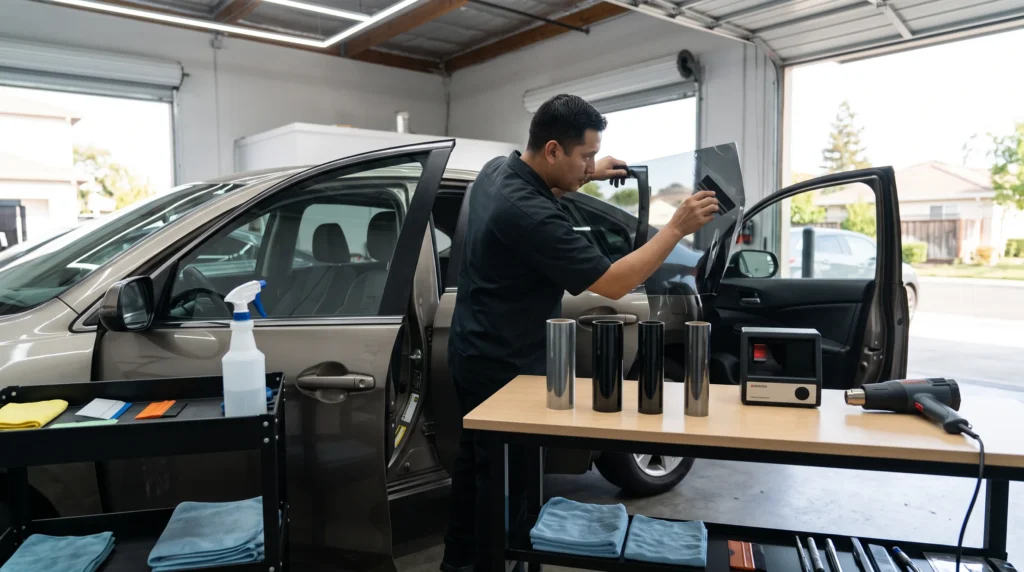
Remember that UV rejection and heat rejection measure different things. A film can block a high percentage of UV rays without offering the strongest heat control.
Understanding Window Tint Film Options in Union City, CA
When shopping for Window Tinting in Union City, CA, you’ll encounter several types of automotive window film.
Common categories include:
- Dyed window tint
- Carbon window tint
- Metallized window tint
- Ceramic window tint
- Multi-layer nano-ceramic window tint
Each category uses different materials and construction methods.
Some are designed mainly for appearance and glare reduction. Others place greater emphasis on rejecting solar energy.
The film’s construction matters more than how dark it looks.
At XCare Auto Films, our published window tinting packages feature XPEL PRIME XR PLUS ceramic film.
The other film categories below are included to help you understand the differences while comparing products. They are not a list of every film currently stocked at our shop.
Dyed Window Tint: Traditional Shade and Glare Control
Dyed window tint uses coloring within the film to reduce the amount of visible light entering the vehicle.
It is a familiar option for owners who want a darker appearance and reduced glare.
XPEL offers a color-stable dyed film called PRIME CS.
According to XPEL’s PRIME film comparison, PRIME CS provides:
- Up to 35% infrared rejection
- Up to 32% infrared energy rejection
- 99% UV rejection
- Color-stable film construction
- Multiple available shades
- A limited lifetime manufacturer warranty
The published heat figures represent the manufacturer’s stated testing conditions and film options.
Is Dyed Window Tint Good for Commuters?
Dyed film can be suitable for someone who is mostly concerned about reducing glare or changing the appearance of rear windows.
It also offers UV protection.
The main limitation is that conventional dyed films generally provide less heat rejection than higher-performing ceramic products.
A dark dyed film may appear to offer strong protection because it blocks visible sunlight. That does not necessarily mean it rejects as much solar heat as a lighter ceramic film.
If heat control matters more than appearance, compare the performance specifications before choosing dyed tint.
Carbon Window Tint: Appearance and Solar Control
Carbon window tint is another category frequently advertised by automotive tint manufacturers.
These films use carbon-based materials in their construction.
They are often marketed for their darker appearance and resistance to fading.
Some carbon films provide useful solar control, but the product name alone does not reveal the actual heat rejection.
One brand’s carbon film may perform differently from another’s.
What Should You Check Before Choosing Carbon Film?
Ask for the product’s:
- Visible light transmission
- Total solar energy rejection
- Infrared rejection
- UV rejection
- Manufacturer warranty
These measurements help you compare different products without relying on broad claims.
Carbon tint may be worth considering if appearance is a big part of your decision.
For East Bay commuters whose main concern is cabin heat, premium ceramic film is also worth comparing.
XCare Auto Films does not list a separate carbon tint package on its published service pages. Contact the shop if you want to ask about current film availability.
Ceramic Window Tint: Heat Rejection With Clearer Visibility
Ceramic window tint uses ceramic-based technology to help reject incoming solar energy.
One reason ceramic film is popular is that it can provide strong heat rejection without requiring extremely dark windows.
That matters if you prefer a bright cabin or frequently travel after sunset.
A lighter ceramic film can outperform a darker conventional film in heat-rejection testing, depending on the products being compared.
What Makes Ceramic Tint Different?
Ceramic window film can offer:
- Higher infrared heat rejection
- Strong UV protection
- Reduced daytime glare
- Multiple shade choices
- Good optical clarity
- Heat control without metal-based film construction
- Manufacturer-backed warranty coverage
The actual performance depends on the film and shade.
XPEL offers ceramic films in its PRIME XR and PRIME XR PLUS lines.
At XCare Auto Films, we specialize in XPEL ceramic window tint using PRIME XR PLUS.
XPEL Window Tint Film Comparison: CS vs XR vs XR PLUS
Comparing film specifications is one of the most useful steps when choosing Window Tinting in Union City, CA.
XPEL publishes performance information for several PRIME products.
Here is how three of its film lines compare.
| Feature | PRIME CS | PRIME XR | PRIME XR PLUS |
|---|---|---|---|
| Film technology | Color-stable dyed | Nano-ceramic | Multi-layer nano-ceramic |
| Infrared rejection | Up to 35% | Up to 85% | Up to 96% |
| Infrared energy rejection | Up to 32% | Up to 64% | Up to 70% |
| UV rejection | 99% | 99% | 99% |
| Glare reduction | Varies by shade | Varies by shade | Varies by shade |
| Available shades | Multiple | Multiple | Multiple |
| Manufacturer warranty | Limited lifetime | Limited lifetime | Limited lifetime |
| Main appeal | Appearance and UV protection | Heat rejection and clarity | Higher published infrared performance |
Source: XPEL PRIME Window Tint Product Comparison
These figures are manufacturer-published maximums under specified testing conditions. They do not mean every shade performs at the maximum level.
The table also shows why window tint should not be judged only by darkness.
PRIME CS and PRIME XR PLUS both provide high UV rejection, but their published infrared performance differs considerably.
For a vehicle that spends long periods in East Bay traffic, that difference may matter more than choosing the darkest available shade.
Why XPEL PRIME XR PLUS Is Our Featured Window Tint in Union City, CA
XCare Auto Films features XPEL PRIME XR PLUS for customers looking for strong heat rejection and a clean finished appearance.
PRIME XR PLUS uses multi-layer nano-ceramic technology.
It is designed to reduce infrared heat entering through automotive glass while blocking UV radiation and reducing glare.
XPEL PRIME XR PLUS Performance
XPEL and XCare Auto Films publish the following maximum specifications:
- Up to 96% infrared rejection
- Up to 70% infrared energy rejection
- Up to 71% total solar energy rejection
- 99% UV rejection
- Multiple available film shades
- Limited lifetime manufacturer warranty
The actual measurements vary by shade, glass type, and the testing method.
The 96% infrared rejection figure should not be confused with 96% total solar heat rejection.
Those measurements describe different parts of solar energy.
Why Does This Matter in Union City, CA?
Picture your car parked outdoors during the afternoon.
The sun warms the dashboard, seats, steering wheel, and other cabin surfaces.
Once you get back inside, the air conditioning has to remove that accumulated heat.
Ceramic window tint cannot prevent all heat buildup, but it can reduce the solar energy passing through treated windows.
During a commute, this can make sunlight exposure more manageable.
Does Ceramic Window Tint Interfere With Electronics?
XPEL states that its PRIME XR PLUS film does not cause signal interference.
Its non-metallic ceramic construction is appealing to owners concerned about GPS, cellular reception, or other electronic systems.
This can be useful for modern vehicles with large displays, connected features, and navigation systems.
Is XR PLUS Available in Different Shades?
Yes.
XPEL offers PRIME XR PLUS in several visible light transmission options.
The available shades allow owners to compare appearance, privacy, and visibility.
Not every available shade is legal on every vehicle window in California.
Before selecting a film, ask our team to explain which applications comply with state law.
Window Tint Percentages Explained: What Does VLT Mean?
When comparing Window Tinting in Union City, CA, you may hear people talk about 5%, 20%, 35%, 50%, or 70% tint.
These numbers describe visible light transmission, often abbreviated as VLT.
VLT measures how much visible light passes through the film under the stated test conditions.
A higher VLT percentage allows more visible light through. A lower percentage allows less light through.
Here is how common shades generally appear.
| Nominal VLT | Appearance | Visibility Consideration |
|---|---|---|
| 70% | Nearly clear | Allows substantial visible light through |
| 50% | Light tint | Mild darkening |
| 35% | Moderate tint | Noticeably darker |
| 20% | Dark tint | Reduced visibility in low light |
| 5% | Very dark tint | Strongly reduced visibility through the glass |
These descriptions are for comparison only. They are not recommendations for California front side windows.
Is 20% Tint Darker Than 35% Tint?
Yes.
A film rated at 20% VLT lets less visible light through than a film rated at 35%.
This generally makes the 20% film appear darker.
Does Darker Tint Always Mean Better Heat Rejection?
No.
A darker shade reduces more visible light, but it does not automatically reject more total solar heat.
The type of film matters.
A lighter premium ceramic tint can have stronger published heat performance than a dark conventional dyed film.
Does Factory Glass Affect Tint Percentage?
Yes.
Many vehicles have glass that already blocks some visible light.
Adding aftermarket film changes the amount of light passing through the completed window.
The film’s listed VLT and the installed window’s final VLT are not necessarily the same.
This matters when considering California’s restrictions on front side windows.
Heat Rejection vs Window Darkness: What Actually Matters?
Choosing Window Tinting in Union City, CA becomes easier once you understand a few measurements.
Visible Light Transmission (VLT)
VLT describes how much visible light passes through the film.
It tells you about shade, not total heat rejection.
Total Solar Energy Rejection (TSER)
TSER measures how much of the sun’s total energy is rejected by the tested film-and-glass system.
This is a useful figure when comparing films for cabin heat control.
A higher TSER generally indicates stronger total solar energy rejection when comparing results obtained under the same testing conditions.
Infrared Rejection (IR)
Infrared rejection measures how much infrared radiation is rejected under a stated measurement.
Manufacturers may publish results at a selected wavelength.
An infrared rejection figure should not be treated as the percentage of all solar heat blocked.
Infrared Energy Rejection (IRER)
IRER is another measurement related to infrared energy.
XPEL publishes IRER values alongside its other specifications.
Compare films using matching measurement methods whenever possible.
UV Rejection
UV rejection measures how much ultraviolet radiation the film blocks under testing conditions.
UV protection helps reduce UV exposure through treated glass.
A high UV rejection percentage does not automatically mean the film provides the strongest cabin heat control.
Here’s what matters: If your main concern is heat, compare TSER and infrared-related measurements. If your concern is appearance or glare, consider VLT too.
California Window Tint Laws for Union City, CA Vehicles
Before scheduling Window Tinting in Union City, CA, understand California’s restrictions on automotive window film.
The rules differ depending on which window is being treated.
California Vehicle Code Section 26708 covers restrictions and exceptions for material installed on vehicle windows.
Front Side Windows
California generally prohibits aftermarket tinting on front side windows except under narrow statutory exceptions.
For the clear, colorless, transparent UV-protective material permitted under Section 26708(d), the law requires:
- At least 88% visible light transmission through the film material itself
- At least 70% visible light transmission through the completed glass-and-film assembly
- Compliance with the applicable federal glazing requirements
- Material manufactured to improve UVA protection
- A certificate identifying the installer and manufacturer
- Removal or replacement if the film becomes damaged in a way that obstructs clear vision
This distinction matters.
A film advertised as 70% VLT does not automatically qualify for California’s front side windows.
The film itself must meet the separate 88% requirement under this exception, and the finished assembly must satisfy the applicable rules.
Rear Side Windows
California generally allows darker tint on side windows located behind the front seats.
Owners can consider shade and privacy preferences while maintaining safe visibility.
Rear Windshield
Rear-window tint is generally permitted when the vehicle meets the outside mirror requirements.
Under the statute, the vehicle must have appropriate outside mirrors on both sides that allow the required rearward view.
Front Windshield
California allows certain transparent materials on the uppermost portion of the windshield when the statutory conditions are met.
There are also narrow exceptions for qualifying UV-protective material under medical circumstances.
A full-windshield tint installation is not automatically legal just because the film appears clear.
XCare Auto Films offers windshield tinting services, but any proposed installation must comply with California law.
Before choosing windshield or front-door film, ask us about the applicable requirements and available compliant materials.
You can also read the California Vehicle Code Section 26708 text, including the amendment that took effect January 1, 2026.
Choosing Window Tinting in Union City, CA for Your Daily Commute
Not everyone uses their vehicle the same way.
A car that spends several hours on I-880 may have different tint needs from one used mainly for errands around Union City, CA.
Your schedule, parking situation, and preferred level of visibility should shape the decision.
Commuting on I-880
I-880 connects Union City, CA with Fremont, CA, Hayward, CA, and other East Bay communities.
Stop-and-go traffic can leave your vehicle exposed to sunlight for long periods.
For this type of commute, ceramic film with strong solar heat rejection is worth considering.
Focus on the film’s tested performance instead of selecting the darkest shade available.
Traveling Along Decoto Road and Mission Boulevard
Local routes can involve repeated stops, parking, and changes in sun exposure.
If your commute includes Decoto Road or Mission Boulevard, consider which side of your vehicle receives the most direct sunlight during your usual travel times.
You may also want to protect rear passengers from UV exposure and glare.
Crossing the Dumbarton Bridge
For commuters traveling toward the Peninsula on CA-84, sunlight can enter the vehicle from different directions throughout the day.
A ceramic film can reduce heat and glare through legally treated windows.
If you frequently travel at sunrise or sunset, maintain clear visibility and choose a shade suited to those lighting conditions.
Parking Outdoors Near Work or School
Some East Bay vehicle owners spend more time parked outdoors than traveling.
In this situation, solar energy entering through the glass can warm the interior while the vehicle sits.
Heat-rejecting tint helps reduce incoming solar energy, but the cabin will still get warm over time.
Sunshades and proper ventilation can also be useful when appropriate.
Traveling at Night
Very dark tint can reduce outward visibility after sunset.
This matters when checking blind spots, reversing, or moving through poorly lit parking areas.
The darkest available rear-window film is not automatically the most comfortable choice for someone who frequently travels at night.
Think about both daytime comfort and nighttime visibility.
Which Windows Can Be Included in a Tint Package?
XCare Auto Films offers several window tint coverage options.
Our window tint packages include different combinations of side and rear windows, with separate glass areas available for review.
All Side and Rear Windows
This package covers the applicable side and rear glass areas.
The actual film installed on each window must satisfy California law.
Do not assume that every shade shown on a product page can be installed on every window.
Rear Doors, Rear Quarters, and Back Window
This package focuses on rear passenger and rear cabin glass.
It may appeal to families who want stronger solar control for rear passengers.
It can also provide added privacy when suitable darker film is selected.
Front Door Windows
The front door windows are subject to California’s stricter film requirements.
Any treatment should be reviewed against the law before installation.
A standard 70% VLT film is not automatically compliant under the state’s clear UV-film exception.
Sunroof and Panoramic Roof
Large glass roofs can admit sunlight into the cabin.
XCare Auto Films lists ceramic sunroof tinting as an available service.
Before installing film on a sunroof or panoramic roof, confirm that the film is suitable for the vehicle’s glass construction and the manufacturer’s guidance.
Windshield
The windshield is a large source of sunlight entering the vehicle.
It also has strict legal restrictions.
Ask about the permitted applications rather than assuming any clear-looking ceramic film can be installed across the entire windshield.
Tesla and Electric Vehicle Window Tinting in Union City, CA
Tesla owners frequently consider ceramic window tint because their vehicles often feature large glass areas.
Model 3 and Model Y vehicles have expansive side windows and glass roof designs that can contribute to sunlight entering the cabin.
Why Choose Ceramic Film for a Tesla?
XPEL PRIME XR PLUS offers heat rejection and UV protection while maintaining optical clarity.
The film’s non-metallic construction also avoids the signal interference associated with certain metal-containing products.
A lighter shade may appeal to owners who prefer a bright cabin.
Darker rear shades can be considered where permitted.
Does Window Tint Improve Tesla Range?
Reducing solar energy entering the vehicle can lower some of the heat load that the air conditioning system must handle.
Any effect on energy consumption depends on weather, vehicle configuration, HVAC settings, and how the car is used.
A specific range improvement should not be assumed simply because window tint has been installed.
Tesla Model 3 and Model Y Tint Options
The appropriate film layout depends on the Tesla model, model year, and glass design.
Owners can discuss legally permitted side and rear window applications, along with suitable roof treatments.
XCare Auto Films offers dedicated Tesla window tint services for customers who want model-specific guidance.
What Affects Window Tinting in Union City, CA Cost?
Window Tinting in Union City, CA does not have one standard cost that applies to every vehicle.
Your quote depends on the film selected, the amount of glass being treated, and the installation work involved.
Film Selection
Different window films use different materials and manufacturing processes.
Premium nano-ceramic films such as XPEL PRIME XR PLUS have different product specifications from traditional dyed films.
Number of Windows
Tinting rear passenger windows requires different work from treating all applicable side and rear glass.
The number of windows affects the amount of material and installation time.
Vehicle Size and Design
A compact sedan, SUV, truck, and Tesla may have different glass dimensions.
Curved rear windows, quarter glass, frameless doors, and large roof panels can require more fitting work.
Existing Tint Removal
If your vehicle already has damaged or poorly installed film, removal may be needed before applying new tint.
Old adhesive may require careful cleaning.
Additional Glass Areas
Sunroof or other suitable glass treatments may involve separate work.
The material must be compatible with the glass and any proposed installation must comply with applicable law.
Warranty and Product Selection
XPEL PRIME window films carry manufacturer-backed warranty options.
The applicable coverage depends on the product and warranty terms.
To request a quote, call (510) 993-9833 or use our contact form.
Tell us your vehicle’s year, make, model, which windows you want treated, and whether you are interested in heat reduction, UV protection, or rear cabin privacy.
What Happens During Professional Window Tint Installation?
Professional Window Tinting in Union City, CA should begin with a review of the vehicle and the glass being treated.
At XCare Auto Films, our team focuses on careful preparation and clean film placement.
Step 1: Inspect the Glass
The installer checks the glass for contamination, scratches, old film, and other conditions that could affect installation.
The proposed film and window locations are reviewed before work begins.
Step 2: Clean the Windows
Dust, grease, and residue must be removed before applying film.
Even small particles can affect the finished appearance if trapped beneath the tint.
Step 3: Prepare and Fit the Film
The film is fitted to the selected glass.
Curved windows may require shaping so the material follows the surface properly.
Step 4: Apply the Film
The installer applies the film using an installation solution and carefully removes excess moisture.
The edges are checked for alignment and finish.
Step 5: Inspect the Installation
After application, the installer checks the completed windows.
Some haze or moisture marks may remain as the film begins curing.
The customer should also receive care instructions before leaving.
How to Care for New Window Tint After Installation
Your new window tint needs time to dry and settle.
According to XPEL’s product care instructions, PRIME automotive window film can show slight haze or moisture bubbles shortly after installation.
These conditions can be normal while installation moisture evaporates.
Wait Before Lowering Your Windows
XPEL recommends waiting approximately one to five days before lowering or cleaning newly tinted windows, depending on climate conditions.
Follow the instructions your installer provides.
Allow Moisture to Evaporate
Small moisture bubbles and haze may remain for up to ten days after installation.
Do not try to push or scrape them away.
If a problem remains after the expected drying period, contact the installer.
Use Gentle Cleaning Products
When cleaning is permitted, use a clean microfiber towel lightly dampened with water.
XPEL also allows mild, non-ammonia glass cleaners.
Avoid abrasive pads, harsh chemicals, and aggressive scrubbing.
Do Not Pick at Film Edges
Avoid pulling or rubbing the film’s edges.
If you notice lifting, peeling, or other damage, contact the shop for an inspection.
Proper care helps preserve the film’s clarity and appearance.
Why Choose XCare Auto Films for Window Tinting Near Union City, CA?
Choosing the right film matters, but the installation also affects the finished result.
Careful glass cleaning, accurate placement, and attention to film edges help create a smooth appearance.
At XCare Auto Films, we install XPEL ceramic window tint for vehicle owners from Union City, CA, Fremont, CA, Hayward, CA, and nearby East Bay communities.
XPEL-Certified Installers
Our team is XPEL certified, and we are an XPEL vendor.
We specialize in genuine XPEL protection products with manufacturer-backed warranty options.
XPEL PRIME XR PLUS Ceramic Tint
Our featured automotive tint uses multi-layer nano-ceramic technology for heat rejection and UV protection.
We help customers compare film performance and available window coverage.
Tint Options for Different Vehicles
We work with owners of:
- Tesla Model 3, Model Y, Model S, and Model X
- Luxury sedans
- Sports and performance vehicles
- SUVs and family vehicles
- Trucks
- Daily commuter cars
Other Vehicle Protection Services
If you are considering protection beyond the windows, XCare Auto Films also offers:
Our shop has received more than 85 customer reviews with a reported five-star rating.
Serving Union City and Nearby East Bay Communities
Although this guide focuses on Window Tinting in Union City, CA, our physical shop is located in Fremont, CA.
We welcome vehicle owners from Union City, CA, Hayward, CA, Newark, CA, and surrounding communities who want to discuss professional XPEL window tint installation.
Schedule Window Tinting in Union City, CA With XCare Auto Films
Choosing Window Tinting in Union City, CA starts with understanding what matters most for your vehicle.
If you want stronger heat rejection, look closely at the film’s tested solar performance.
If glare and privacy are your biggest concerns, compare visible light transmission and the legal restrictions for each window.
And if you regularly commute on I-880 or travel between Union City, CA and Fremont, CA, consider how much time you spend with direct sunlight entering the cabin.
At XCare Auto Films, we can help you compare XPEL PRIME XR PLUS options, review compliant film applications, and discuss your vehicle’s glass layout.
XCare Auto Films
Address: 45277 Fremont Blvd STE 7, Fremont, CA 94538
Phone: (510) 993-9833
Business Hours: Monday through Friday, 11 AM to 7 PM
Website: https://xcareautofilms.com
Schedule an Appointment: Contact XCare Auto Films
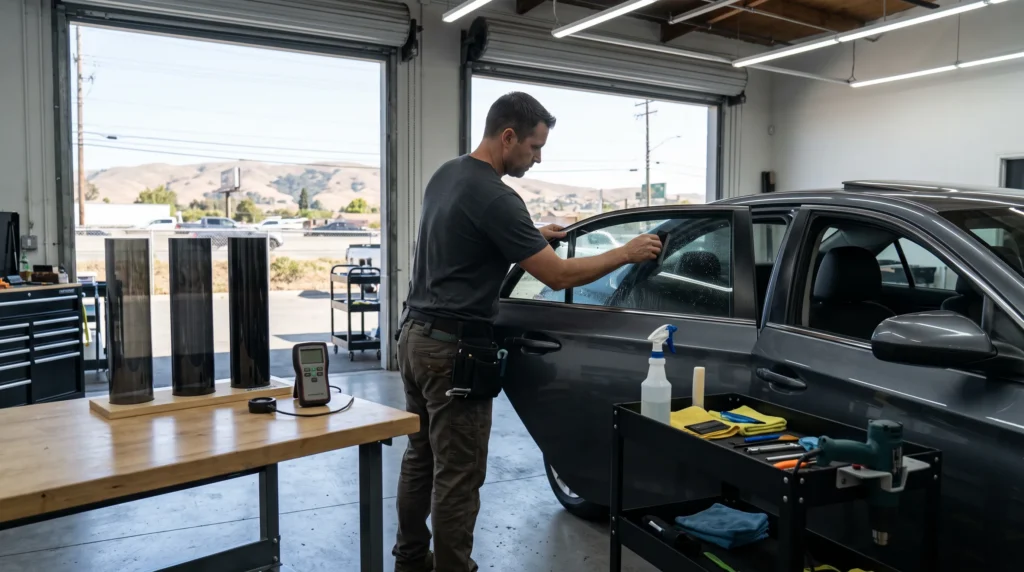
If you’re searching for ceramic window tint near Union City, CA, call XCare Auto Films to discuss your vehicle, compare film options, and request a quote.
Frequently Asked Questions About Window Tinting in Union City, CA
1. What type of window tint is best for East Bay commuters?
Ceramic window tint is worth considering if solar heat rejection and UV protection matter most. Premium products such as XPEL PRIME XR PLUS can reject more infrared energy than conventional dyed film under comparable testing conditions. The best choice also depends on your visibility preferences, which windows you want treated, and California law.
2. Is ceramic window tint better than dyed window tint?
Ceramic film generally offers stronger heat-rejection performance than conventional dyed film, depending on the products being compared. Dyed film can reduce glare, block UV rays, and create a darker appearance. XPEL PRIME XR PLUS provides up to 96% infrared rejection under its published test conditions, compared with up to 35% for PRIME CS.
3. Does darker window tint always keep a vehicle cooler?
No. Darker tint reduces more visible light, but that does not automatically mean stronger total heat rejection. A lighter ceramic film may reject more solar energy than a darker dyed film. Compare total solar energy rejection and infrared-related specifications rather than relying on shade alone.
4. What window tint percentage is legal in California?
California has different rules for front and rear windows. Under the clear UV-protective film exception for front side windows, the material must transmit at least 88% of visible light, the completed window must meet the applicable 70% minimum, and other conditions apply. Rear side windows have different restrictions. Review California Vehicle Code Section 26708 before selecting a film.
5. Does XPEL PRIME XR PLUS block UV rays?
Yes. XPEL lists 99% UV rejection for PRIME XR PLUS. The film also provides infrared heat rejection and glare-reduction benefits, depending on the shade and testing conditions. UV rejection and total solar energy rejection measure different properties, so the percentages should not be treated as interchangeable.
6. How long should I wait before rolling down tinted windows?
XPEL recommends waiting approximately one to five days after installation before lowering or cleaning newly tinted windows, depending on climate conditions. Temporary haze or moisture bubbles can remain for up to ten days while the film dries. Follow your installer’s care instructions.
7. Where can I schedule Window Tinting near Union City, CA?
XCare Auto Films installs XPEL ceramic window tint at 45277 Fremont Blvd STE 7, Fremont, CA 94538. Our shop welcomes vehicle owners from Union City, CA and nearby East Bay communities. Call (510) 993-9833 or visit our online contact page to discuss compliant tint options and schedule an appointment.
Sources
The following manufacturer, California legal, municipal, and business resources support the technical specifications, film comparisons, installation information, and legal guidance in this article.
1. XPEL PRIME Window Tint Comparison
Title: XPEL PRIME Window Tint
Publisher: XPEL
Publication Date: Not listed
URL: https://lp.xpel.com/xpel-prime-window-tint
2. XPEL Automotive Window Film
Title: Automotive Window Film
Publisher: XPEL
Publication Date: Not listed
URL: https://www.xpel.com/products/automotive-window-tint
3. XPEL Window Tint Care Instructions
Title: XPEL Product Care Instructions
Publisher: XPEL
Publication Date: Not listed
URL: https://www.xpel.com/product-care
4. California Vehicle Code Section 26708
Title: California Vehicle Code Section 26708: Windshield and Window Restrictions
Publisher: California Legislature
Publication Date: Amended in 2025, effective January 1, 2026
URL: https://leginfo.legislature.ca.gov/faces/codes_displaySection.xhtml?sectionNum=26708.&lawCode=VEH
5. California Vehicle Code Reference
Title: California Vehicle Code Section 26708
Publisher: Justia, reproducing California statutory text
Publication Date: 2025 California Code, with amendment effective January 1, 2026
URL: https://law.justia.com/codes/california/code-veh/division-12/chapter-4/section-26708/
6. XCare Auto Films Window Tint Services
Title: Window Tint Services
Publisher: XCare Auto Films
Publication Date: Not listed
URL: https://xcareautofilms.com/services/window-tint/
7. XCare Auto Films Ceramic Window Tint
Title: Ceramic Window Tint Services
Publisher: XCare Auto Films
Publication Date: Not listed
URL: https://xcareautofilms.com/services/ceramic-window-tint/
8. XCare Auto Films Window Tint Packages
Title: Window Tint Deals and Packages
Publisher: XCare Auto Films
Publication Date: Not listed