
Window Tinting in Sunnyvale, CA helps vehicle owners reduce cabin heat, control bright sunlight, and make daily commuting more comfortable. Whether you travel along US-101, take CA-237 toward Mountain View, CA, or spend your afternoons on Lawrence Expressway, sunlight entering through your vehicle’s windows can make the cabin uncomfortable. Ceramic window tint reduces incoming solar energy while allowing you to choose a shade that fits your visibility needs and California law.
You may have noticed that your car feels warm after sitting outside for a few hours, even when the weather isn’t unusually hot.
The steering wheel feels uncomfortable. The seats have absorbed sunlight. Your air conditioning needs time to cool everything down.
Window tint can help with that problem, but the film you choose matters.
Two films may look almost identical from outside the vehicle while offering very different levels of heat rejection. A dark conventional film may block plenty of visible light without rejecting as much solar heat as a lighter premium ceramic film.
At XCare Auto Films, we install XPEL automotive window tint for vehicle owners from Sunnyvale, CA, Mountain View, CA, Santa Clara, CA, and surrounding Bay Area communities. Our XPEL-certified team specializes in XPEL PRIME XR PLUS, a multi-layer nano-ceramic film designed to reduce infrared heat, block UV radiation, and help control glare.
Our installations take place at our Fremont, CA shop.
If you’re researching Window Tinting in Sunnyvale, CA, this guide explains how ceramic film works, what the heat-rejection numbers really mean, which windows can be treated, and how to choose tint for South Bay commuting.
Table of Contents
- Why Sunnyvale Vehicle Owners Choose Window Tint
- How Ceramic Window Tint Reduces Heat
- Ceramic Tint vs Conventional Window Film
- XPEL PRIME Film Options Compared
- XPEL PRIME XR PLUS Heat-Rejection Performance
- Understanding Window Tint Percentages
- Does Darker Window Tint Mean Better Heat Rejection?
- California Window Tint Laws
- Choosing Ceramic Tint for South Bay Commuting
- Which Vehicle Windows Should Be Tinted?
- Ceramic Tint for Tesla and Electric Vehicles
- What Is Included in XCare’s Tint Packages?
- What Happens During Installation?
- What Affects Window Tinting Cost?
- Caring for Your New Ceramic Window Tint
- Understanding the XPEL Window Tint Warranty
- Why Choose XCare Auto Films?
- Schedule Window Tinting Near Sunnyvale
- Frequently Asked Questions
- Sources
Why Window Tinting in Sunnyvale, CA Makes Sense for Local Vehicle Owners
Sunnyvale, CA is home to busy office districts, residential neighborhoods, shopping areas, and major commuting routes.
For many vehicle owners, a normal day involves traveling on US-101, CA-237, CA-85, El Camino Real, or Mathilda Avenue.
A vehicle may spend part of the day moving through traffic and several hours parked outdoors.
Both situations can bring unwanted sunlight into the cabin.
Sunlight Can Heat Interior Surfaces
When sunlight enters a vehicle, seats, carpets, dashboards, and other interior materials absorb part of that energy.
Those surfaces warm up and contribute to rising cabin temperatures.
Glass also has different properties depending on its construction and factory treatments.
A properly selected automotive window film reduces some of the solar energy passing through treated glass.
That can help limit heat buildup during daytime travel.
The film won’t stop a parked vehicle from getting hot, but it can reduce how much solar energy enters through covered windows.
Glare Can Make Commuting Uncomfortable
Bright sunlight can reach your eyes from the side during morning or afternoon trips.
Window tint reduces visible light passing through the treated glass, which may make daytime glare less uncomfortable.
The amount of reduction depends on the film shade.
Darker film can reduce more visible light, but it can also make nighttime visibility worse.
Choosing a suitable shade matters just as much as choosing a film with good heat rejection.
UV Exposure Affects Vehicle Interiors
Sunlight can contribute to fading and wear on upholstery, plastics, and other interior materials.
According to XPEL’s PRIME window tint comparison, its PRIME CS, PRIME XR, and PRIME XR PLUS products block 99% of harmful UV rays under the manufacturer’s stated test conditions.
That makes UV protection one reason to consider automotive film even if you don’t want a very dark appearance.
UV rejection and heat rejection are different measurements, though.
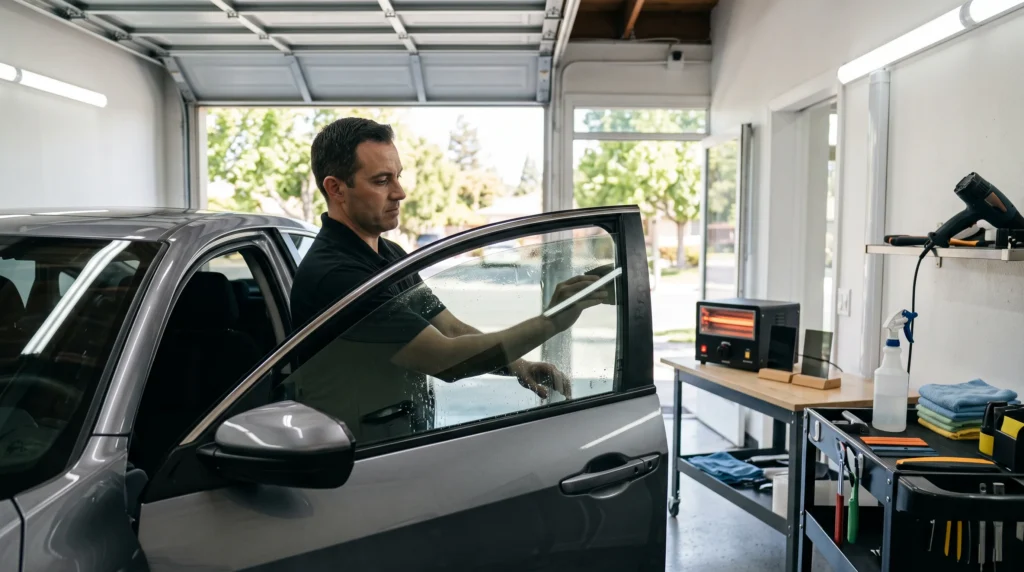
You can have a film that blocks a high percentage of UV radiation without offering the strongest heat control.
How Ceramic Window Tint in Sunnyvale, CA Reduces Cabin Heat
Ceramic window tint uses ceramic-based particles within the film to help manage incoming solar energy.
This differs from conventional films that depend largely on dyes to darken the glass.
Ceramic film can reject substantial amounts of infrared radiation while allowing a useful amount of visible light through, depending on the product.
To understand the difference, it helps to look at three parts of sunlight.
Visible Light
Visible light is the part of sunlight that makes objects visible.
Window tint reduces how much of this light passes through the glass.
A darker film generally lets less visible light into the vehicle.
This affects appearance, privacy, and visibility.
Infrared Radiation
Infrared radiation makes up part of the solar energy that reaches a vehicle.
Premium ceramic films are designed to reject selected infrared wavelengths.
XPEL PRIME XR PLUS uses multi-layer nano-ceramic technology for this purpose.
The amount of energy rejected depends on the film and the measurement used.
Ultraviolet Radiation
UV radiation is another part of sunlight.
Automotive window film can reduce UV passing through treated glass.
XPEL lists high UV rejection across several PRIME products, including its ceramic film lines.
Why Ceramic Construction Matters
A conventional dark film may reduce plenty of visible sunlight.
A lighter ceramic film can sometimes reject more solar energy than that darker conventional film.
This is one reason owners interested in Window Tinting in Sunnyvale, CA often compare ceramic products instead of choosing tint based only on appearance.
Here’s why: Film darkness and total heat rejection are related to different measurements. You need both numbers to understand how a product may perform.
Ceramic Window Tint vs Conventional Film: What’s the Difference?
Not every type of window film is built the same way.
Some products are designed mainly for a dark appearance and glare reduction. Others put more emphasis on solar heat control.
Dyed Window Tint
Dyed window tint contains coloring that reduces visible light transmission.
It can create a darker appearance and reduce daytime glare.
XPEL’s PRIME CS is a color-stable dyed film.
The manufacturer lists 99% UV rejection and up to 35% infrared rejection for PRIME CS.
The product may suit someone who mainly wants appearance changes and UV protection on permitted windows.
Its published infrared performance is lower than XPEL’s premium ceramic products.
Carbon Window Tint
Carbon film uses carbon-based materials as part of its construction.
Some carbon products are designed to provide stable color and useful solar control.
Performance varies by brand and film.
The term “carbon” does not automatically tell you how much heat the product rejects.
XCare Auto Films discusses carbon film as an option on its window tint package page.
Ask about current availability and the exact product specifications if you’re interested in carbon film.
Metallized Window Tint
Metallized films use thin metal-based layers to reflect some solar energy.
Their heat rejection depends on product construction.
Certain metal-containing films can raise questions about electronic signal reception, although modern products are not all alike.
When comparing metallized film, review the manufacturer’s claims for cellular, GPS, and radio compatibility.
Ceramic Window Tint
Ceramic film is designed to reject solar energy without depending mainly on visible darkness.
XPEL PRIME XR and PRIME XR PLUS use nano-ceramic technology.
These products provide higher published infrared rejection figures than XPEL PRIME CS.
For owners who want better control of sunlight through their vehicle’s glass, ceramic film is worth a close look.
XPEL PRIME Window Tint Options Compared
When researching Window Tinting in Sunnyvale, CA, looking at actual product specifications is more useful than comparing sample shades alone.
XPEL publishes performance figures for PRIME CS, PRIME XR, and PRIME XR PLUS.
The following table compares their stated maximum performance.
| Feature | XPEL PRIME CS | XPEL PRIME XR | XPEL PRIME XR PLUS |
|---|---|---|---|
| Film technology | Color-stable dyed | Nano-ceramic | Multi-layer nano-ceramic |
| Infrared rejection | Up to 35% | Up to 85% | Up to 96% |
| Infrared energy rejection | Up to 32% | Up to 64% | Up to 70% |
| UV rejection | 99% | 99% | 99% |
| Available shades | Multiple | Multiple | Multiple |
| XPEL warranty | Limited lifetime | Limited lifetime | Limited lifetime |
| Main use | Appearance and UV control | Ceramic heat control | Higher published infrared rejection |
Source: XPEL PRIME Window Tint Product Comparison
These figures are manufacturer-published maximums under specified testing conditions. They do not mean every shade provides the maximum listed result.
XCare Auto Films’ advertised ceramic tint packages feature PRIME XR PLUS. The other XPEL products are included here for comparison, not as a guarantee that every film is currently available at our shop.
What Does This Comparison Tell You?
PRIME CS, XR, and XR PLUS all provide strong UV rejection.
The larger differences are in infrared performance and film construction.
For someone whose biggest complaint is heat entering through the windows, those differences deserve more attention than the appearance of a small tint sample.
Does the Film Shade Affect Performance?
Yes.
The shade can change visible light transmission, glare reduction, and total solar energy rejection.
Always ask for the specifications of the exact film you are considering rather than relying only on a product family’s highest advertised number.
XPEL PRIME XR PLUS: Ceramic Window Tint for Sunnyvale, CA Heat
At XCare Auto Films, our featured ceramic window tint is XPEL PRIME XR PLUS.
It uses multi-layer nano-ceramic technology to reduce solar heat entering through treated automotive glass.
According to XPEL’s PRIME product information and XCare’s ceramic tint service page, published performance includes:
- Up to 96% infrared rejection
- Up to 70% infrared energy rejection
- Up to 71% total solar energy rejection
- 99% UV rejection
- Multiple available shade options
- A limited lifetime manufacturer warranty
The 96% figure refers to XPEL’s stated infrared test. It is not the same as rejecting 96% of all solar heat.
The 71% total solar energy rejection figure also represents a maximum, not a result guaranteed for every shade or vehicle.
Why Does PRIME XR PLUS Appeal to Sunnyvale Commuters?
Think about an afternoon when your vehicle has been parked outside at work.
Sunlight has been entering through the windows for hours.
A premium ceramic film can reduce the amount of incoming solar energy compared with untreated glass under the same conditions.
That may help with cabin comfort once you’re back on the road.
How much the cabin warms still depends on the weather, vehicle design, amount of treated glass, parking location, and other conditions.
Does Ceramic Tint Need to Be Very Dark?
No.
Premium ceramic products can offer heat rejection in relatively light shades.
You can discuss the balance between cabin comfort, exterior appearance, and visibility with your installer.
The final selection still needs to meet California’s window film laws.
Can XPEL PRIME XR PLUS Affect Electronics?
XPEL states that PRIME XR PLUS does not cause cellular or GPS signal interference.
Its ceramic construction may appeal to owners of vehicles with modern navigation and communication systems.
Window Tint Percentages Explained: What Does VLT Mean?
Choosing Window Tinting in Sunnyvale, CA often involves hearing numbers such as 5%, 20%, 35%, 50%, and 70%.
These numbers generally refer to visible light transmission, also called VLT.
VLT describes how much visible light passes through the material under the stated test conditions.
A higher VLT allows more light through.
A lower VLT allows less light through.
| Nominal VLT | General Appearance | Visibility Consideration |
|---|---|---|
| 70% | Nearly clear | High visible light transmission |
| 50% | Light tint | Mild reduction in visible light |
| 35% | Moderate tint | Noticeably darker glass |
| 20% | Dark tint | Lower visibility in dim conditions |
| 5% | Very dark tint | Strongly reduced outward visibility |
These descriptions explain appearance only. They are not recommendations for front side windows in California.
Is 20% Tint Darker Than 35%?
Yes.
A 20% VLT film transmits less visible light than a 35% VLT film.
That generally makes the 20% film appear darker.
Does 35% Tint Reject 35% of Heat?
No.
The percentage tells you how much visible light passes through.
Heat rejection is measured separately.
A 35% VLT ceramic film and a 35% VLT dyed film may perform quite differently when exposed to sunlight.
Does Factory Glass Change the Final VLT?
Yes.
Automotive glass may already limit some visible light.
Once film is installed, the complete glass-and-film assembly has its own measured VLT.
That finished measurement matters when checking legal requirements.
Does Darker Window Tint Mean Better Heat Rejection?
Not necessarily.
This is one of the biggest misunderstandings about automotive window tint.
A dark film can reduce glare and provide privacy, but darkness alone does not tell you how well it rejects solar heat.
Several measurements are useful when comparing films.
Total Solar Energy Rejection (TSER)
TSER describes the percentage of total solar energy rejected by a tested film-and-glass combination.
It is useful for comparing overall solar heat control when products are measured under comparable conditions.
Infrared Rejection (IR)
Infrared rejection measures a film’s ability to reject infrared radiation under specified testing conditions.
Some manufacturers report this value at a selected wavelength.
The number should not be confused with total solar heat rejection.
Infrared Energy Rejection (IRER)
IRER covers infrared energy under a separate measurement approach.
XPEL lists IRER alongside its infrared rejection figures.
When comparing films, check that you’re looking at the same measurement.
Visible Light Transmission (VLT)
VLT describes how much visible light passes through.
It helps you compare appearance, glare reduction, and outward visibility.
It does not directly tell you how much heat will be rejected.
UV Rejection
UV rejection measures how much ultraviolet radiation the film blocks under stated testing conditions.
A film can offer high UV protection without having the highest TSER.
What this means: For heat control, pay attention to TSER and the infrared measurements. For appearance and visibility, look at VLT. For UV exposure, review the UV rejection figure.
California Window Tint Laws for Sunnyvale, CA Drivers
Before scheduling Window Tinting in Sunnyvale, CA, it’s worth understanding which tint applications California permits.
The rules are not the same for every window.
California Vehicle Code Section 26708 contains restrictions and exceptions for material applied to vehicle glass.
The section was amended effective January 1, 2026.
The California Highway Patrol’s window tint guidance also explains that aftermarket film on front side windows and the windshield is generally restricted, with limited exceptions.
Front Driver and Passenger Windows
California allows certain clear, colorless, transparent UV-protective material on front side windows only when all statutory conditions are satisfied.
Under Section 26708(d), these include:
- The film material must transmit at least 88% of visible light.
- The completed glass-and-film assembly must meet the applicable federal glazing requirements, including at least 70% visible light transmission.
- The material must be designed to improve UVA protection.
- The required certification must identify the installer and manufacturer.
- Material that becomes torn, bubbled, or worn in a way that obstructs clear vision must be removed or replaced.
These are separate conditions.
A film labeled 70% VLT does not automatically qualify for installation on California’s front side windows.
The film itself must meet the 88% requirement under this exception, and the finished glass must meet its own requirements.
Rear Side Windows
California generally permits darker film on rear side windows, subject to the law’s other conditions.
Owners may choose suitable rear shades based on privacy, glare, and outward visibility.
Rear Windshield
Rear-window film is generally permitted when the vehicle meets the required outside rearview mirror conditions.
California law requires suitable exterior mirrors on both sides for certain rear-window applications.
Front Windshield
California has limited exceptions for approved material on the uppermost portion of the windshield.
The law also contains a separate exception involving certain clear UV-protective materials for qualifying medical conditions.
A full-windshield ceramic tint application is not automatically legal just because it looks nearly transparent.
XCare Auto Films lists windshield tinting as a service, but any proposed application must comply with California law.
How Do You Choose a Legal Tint?
Start with the position of each window.
Then review the film’s actual specifications, the factory glass, and any certification requirements.
The fact that XPEL manufactures a shade does not mean the shade can be installed legally on every window in California.
Ask XCare Auto Films to review a compliant application for your vehicle before scheduling.
Choosing Ceramic Window Tint for South Bay Commuting
The best Window Tinting in Sunnyvale, CA package depends partly on your normal travel and parking habits.
Someone who spends much of the day on the highway may have different concerns from someone whose vehicle sits outside at an office.
US-101 Commuters
If you regularly use US-101 between Sunnyvale, CA and Santa Clara, CA, sunlight may enter through your side windows for long periods during traffic.
Ceramic window tint can help reduce solar energy through legally treated glass.
For this type of commute, compare the film’s total solar energy rejection and infrared performance instead of focusing only on a dark appearance.
CA-237 Commuters
CA-237 connects Sunnyvale, CA with Mountain View, CA and other South Bay communities.
Depending on the time of day, the sun may strike the side of your vehicle during extended stretches of travel.
A suitable ceramic film can help reduce that exposure.
Lawrence Expressway and Local Roads
Short trips can still involve strong sunlight.
If you spend time traveling around Lawrence Expressway, Mathilda Avenue, or El Camino Real, think about which windows receive direct sun during your usual trips.
Rear passengers may experience different exposure from the people in the front seats.
Parking Outdoors During Work
If your vehicle sits in an outdoor parking area for several hours, heat buildup may be your biggest complaint.
Premium ceramic tint can reduce incoming solar energy, but the vehicle will still warm up.
When possible, parking in shade and using a suitable sunshade can also help limit exposure.
Traveling at Night
A very dark film can make outward visibility more difficult in low-light conditions.
This can matter when checking surroundings, reversing, or traveling through poorly lit areas.
If you often travel after sunset, discuss lighter shades for eligible windows and avoid choosing tint based only on daytime photographs.
Which Windows Should You Tint for South Bay Heat?
Window Tinting in Sunnyvale, CA can involve different glass areas depending on your vehicle and the lawful treatments available.
XCare Auto Films publishes ceramic tint packages for several window groups.
Rear Passenger Windows
Rear passenger windows are a common starting point for families.
Ceramic film can help reduce sunlight entering those areas and provide additional privacy when an appropriate shade is selected.
The finished appearance depends on the film and existing glass.
Rear Windshield
The rear glass can be a large entry point for sunlight.
A suitable ceramic film may help reduce solar energy through this area.
If your vehicle has defroster lines, ask how the installation will be performed around them.
Front Door Windows
Front side windows have stricter California requirements.
Only qualifying film applications should be considered.
Ask about material that satisfies the specific statutory exception, rather than assuming any light shade is permitted.
Sunroof and Panoramic Glass Roof
Many modern vehicles have large roof glass sections.
These areas can contribute to solar exposure in the cabin.
XCare Auto Films lists ceramic sunroof tint among its services.
Before treating roof glass, confirm film compatibility with the vehicle’s glass construction and manufacturer guidance.
Some roof glass already has factory solar treatments.
Windshield
Windshields account for a large glass area on many vehicles.
They also have strict legal and visibility requirements.
Ask about the limited lawful applications available in California before considering windshield film.
Ceramic Window Tint for Tesla and Electric Vehicles in Sunnyvale, CA
Tesla owners are among the vehicle owners who often ask about ceramic film.
Model 3 and Model Y vehicles have large glass areas, including expansive side windows and roof sections.
Those windows can affect cabin comfort when sunlight reaches the interior.
Why Consider XPEL PRIME XR PLUS for a Tesla?
PRIME XR PLUS offers infrared heat rejection and UV protection without relying solely on dark glass.
The non-metallic ceramic construction is also designed to avoid cellular and GPS signal interference.
Owners can discuss a film selection that fits the glass layout and California law.
Does Ceramic Tint Help With Electric Vehicle Range?
Reducing incoming solar energy can lower part of the cooling load placed on the vehicle’s air conditioning system under certain conditions.
Any change in energy use or range depends on weather, cabin settings, the vehicle, and how it is operated.
A specific range improvement should not be promised from installing tint alone.
Does a Tesla Glass Roof Need Extra Film?
Not always.
Factory glass may already contain solar or UV treatments.
Any additional film should be reviewed for compatibility with the exact vehicle and glass design.
At XCare Auto Films, our Tesla window tint service covers model-specific tint discussions for Tesla Model 3, Model Y, Model S, and Model X owners.
What Is Included in XCare Auto Films’ Ceramic Tint Packages?
XCare Auto Films advertises several XPEL PRIME XR PLUS ceramic tint packages.
You can review the published options on our window tint packages page.
The package categories include:
| Package | Advertised Glass Areas | What to Confirm |
|---|---|---|
| All Side and Rear Windows | Side and rear glass | Exact lawful film for each window |
| Driver and Passenger Front Doors | Front side windows | California compliance and required certification |
| Rear Doors, Rear Quarters, and Back Window | Rear passenger and rear glass | Exact window coverage and shade |
| Sunroof Ceramic Tint | Suitable roof glass | Glass compatibility and film choice |
| Windshield Ceramic Tint | Proposed windshield areas | California legal eligibility before installation |
These are advertised service categories, not a statement that every shade is legal in every position.
Does Every Package Use PRIME XR PLUS?
The published ceramic packages feature XPEL PRIME XR PLUS.
If you are interested in another XPEL film, ask about current stock and available options.
Can You Combine Window Groups?
You can discuss several eligible glass areas during a consultation.
The shop can review the vehicle’s layout, the permitted applications, and the work involved.
Do Packages Include Old Film Removal?
Do not assume old film removal is included.
If your vehicle already has tint that is peeling, bubbling, or discolored, mention that when requesting a quote.
Old material and adhesive may need removal before new film can be installed.
What Happens During Professional Window Tint Installation?
The quality of a tint installation depends on more than the film itself.
Glass preparation, careful fitting, and moisture removal can affect the finished appearance.
Step 1: Review the Vehicle and Window Coverage
The installer checks which windows are being treated and confirms the proposed film.
Existing tint, rear defrosters, curved glass, and window design can affect the work.
California’s legal restrictions should also be reviewed before installation.
Step 2: Clean the Glass
The window surfaces need to be thoroughly cleaned.
Dust, residue, and other contamination can become trapped beneath the film if they aren’t removed.
Careful cleaning helps produce a smoother appearance.
Step 3: Prepare the Film
The installer fits the film to the glass.
Curved rear windows and certain other areas may require shaping before the film is applied.
Step 4: Apply the Film
An installation solution helps position the tint against the glass.
The installer carefully removes excess moisture while fitting the material.
Edges are checked for proper placement.
Step 5: Inspect the Finished Windows
After installation, the windows are examined for alignment and visible contamination.
Some moisture haze or small water pockets can remain temporarily while the film dries.
Step 6: Explain Aftercare
Before leaving, ask when you may lower the windows, clean the glass, and return if a problem appears.
These instructions are useful during the initial drying period.
What Affects Window Tinting in Sunnyvale, CA Cost?
Window Tinting in Sunnyvale, CA does not have one fixed cost for every vehicle.
The amount of work depends on the film selected, the vehicle’s glass design, and the coverage requested.
Film Type
A conventional dyed film and a premium nano-ceramic product use different materials.
The selected XPEL film can affect the quote.
Number of Windows
Treating the rear passenger windows requires a different amount of work than covering all eligible side and rear glass.
Glass Size and Shape
A compact sedan, SUV, truck, and Tesla have different glass layouts.
Large rear windows, small quarter glass, frameless doors, and curved panels can affect installation work.
Existing Film
Old film may need to be removed before installing new material.
Removing damaged film and adhesive can add preparation work.
Sunroof and Other Glass Areas
A compatible roof glass treatment may involve a separate installation.
Not every glass panel should receive the same film.
Vehicle-Specific Details
Rear defrosters, window seals, cameras, and other nearby components may require extra care during installation.
For a quote, call (510) 993-9833 or use the XCare Auto Films contact form.
Share your vehicle’s year, make, model, existing tint condition, and the glass areas you want treated.
How to Care for Ceramic Window Tint After Installation
Window Tinting in Sunnyvale, CA requires some care during the first several days.
According to XPEL’s product care instructions, new PRIME window film may appear hazy or show moisture bubbles while the installation solution dries.
These effects can be normal during the initial drying period.
Wait Before Lowering the Windows
XPEL recommends waiting approximately one to five days before lowering or cleaning newly tinted windows, depending on climate conditions.
Follow your installer’s instructions for your particular appointment.
Lowering a window too early can disturb the film.
Allow the Moisture to Dry
Small moisture bubbles or a hazy appearance may remain for up to ten days.
Do not press, puncture, or scrape these areas.
If the appearance remains unusual after the expected drying period, contact your installer.
Use Gentle Cleaning Materials
Once cleaning is permitted, use a clean microfiber towel slightly dampened with water.
XPEL also allows mild, non-ammonia glass cleaners when needed.
Avoid abrasive pads and harsh scrubbing tools.
Don’t Pick at Film Edges
If an edge begins lifting, contact the shop for an inspection.
Trying to pull or reposition the film yourself can cause further damage.
Keep the Windows Clean
Regular gentle cleaning helps maintain clarity.
Use products suitable for aftermarket tint rather than assuming every household glass cleaner is appropriate.
Understanding the XPEL Ceramic Window Tint Warranty
XCare Auto Films lists a lifetime warranty with its advertised PRIME XR PLUS ceramic tint packages.
XPEL also offers limited lifetime manufacturer warranty coverage on qualifying PRIME window films.
The applicable warranty depends on the product and written terms.
XPEL’s PRIME product information describes manufacturer-backed coverage against specified film problems.
These can include issues involving:
- Bubbling
- Peeling
- Discoloration
- Certain film defects
Does the Warranty Cover Broken Glass?
A window film warranty should not be treated as insurance against broken automotive glass.
It also does not cover every form of outside damage.
Ask for the written warranty terms before installation.
Do You Need to Keep Your Receipt?
Yes.
Keeping your installation records and warranty information can help if you ever need service.
If a problem appears, contact XCare Auto Films so the shop can inspect the film and explain the applicable warranty process.
Why Choose XCare Auto Films for Window Tinting Near Sunnyvale, CA?
The right film matters, but so does the installation process.
Thorough glass cleaning, careful film placement, and attention to edges all affect the finished result.
At XCare Auto Films, we install XPEL ceramic window tint at our Fremont, CA location.
XPEL-Certified Installation
Our team is XPEL certified, and we are an XPEL vendor.
We work with genuine XPEL automotive protection products and applicable manufacturer warranties.
PRIME XR PLUS Ceramic Film
Our published ceramic tint packages feature XPEL PRIME XR PLUS.
We help customers compare heat rejection, UV protection, glare control, and legal window applications.
Tint Options for Different Vehicles
We work with owners of:
- Tesla Model 3, Model Y, Model S, and Model X
- BMW and Mercedes-Benz vehicles
- Porsche and other performance cars
- Family SUVs
- Pickup trucks
- Daily commuter sedans
- Other passenger vehicles
Other Automotive Protection Services
XCare Auto Films also provides:
- Paint protection film
- Ceramic coating
- Paint correction
- Tesla window tint
- Full vehicle protection packages
Serving Sunnyvale and Nearby South Bay Communities
XCare Auto Films is physically located in Fremont, CA.
We welcome customers from Sunnyvale, CA, Mountain View, CA, Santa Clara, CA, and surrounding Bay Area communities.
Whether you’re tinting a newly purchased Tesla or replacing worn film on your daily commuter, we can discuss suitable XPEL film options and the work your vehicle needs.
Schedule Window Tinting in Sunnyvale, CA With XCare Auto Films
Choosing Window Tinting in Sunnyvale, CA starts with deciding what matters most to you.
If cabin heat is your main concern, compare total solar energy rejection and infrared performance.
If you want less daytime glare or more rear-window privacy, consider the film’s visible light transmission.
If you often travel after dark, keep outward visibility in mind.
And for every window, make sure the proposed film application follows California law.
XPEL PRIME XR PLUS is worth considering if you’re looking for premium ceramic heat rejection with a choice of suitable shades.
At XCare Auto Films, we can review your vehicle, explain the PRIME XR PLUS specifications, and discuss appropriate glass coverage before scheduling installation.
XCare Auto Films
Address: 45277 Fremont Blvd STE 7, Fremont, CA 94538
Phone: (510) 993-9833
Business Hours: Monday through Friday, 11 AM to 7 PM
Website: https://xcareautofilms.com
Schedule an Appointment: Contact XCare Auto Films
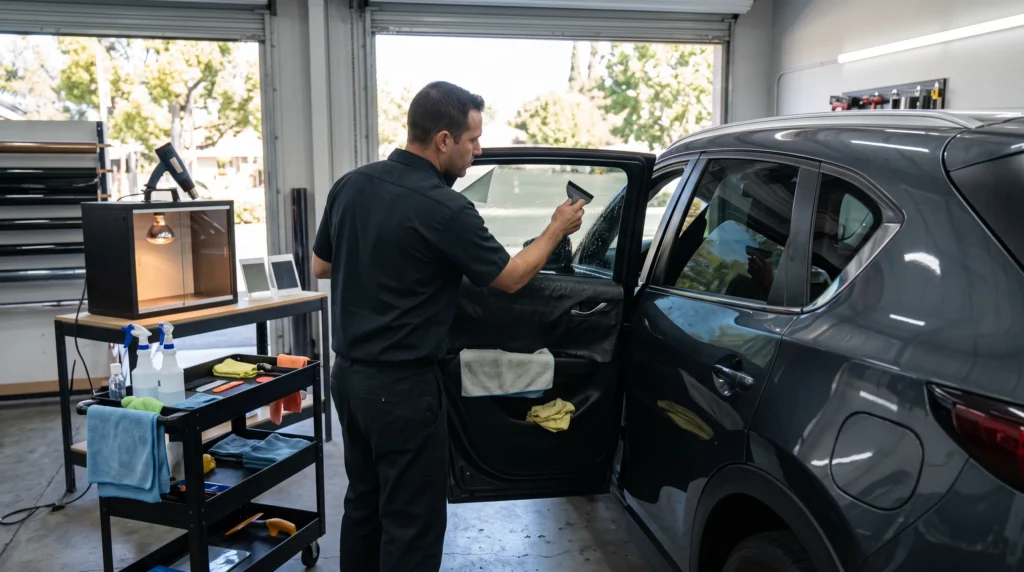
If you’re looking for ceramic window tint serving Sunnyvale, CA, call (510) 993-9833 or use our contact form to compare film options, request a quote, and schedule your appointment.
Frequently Asked Questions About Window Tinting in Sunnyvale, CA
1. Is ceramic window tint worth getting for Sunnyvale, CA heat?
Ceramic window tint can be worth considering if you want to reduce solar heat entering your vehicle. Premium nano-ceramic products such as XPEL PRIME XR PLUS provide strong published infrared rejection while allowing a choice of shades. The cabin will still warm up in direct sunlight, but the film can reduce incoming solar energy through treated glass.
2. Does XPEL PRIME XR PLUS really reject 96% of heat?
XPEL lists up to 96% infrared rejection for PRIME XR PLUS under its stated measurement conditions. That does not mean the film rejects 96% of all solar heat. XPEL and XCare Auto Films also list up to 70% infrared energy rejection and up to 71% total solar energy rejection. Actual figures depend on the shade and testing method.
3. Is ceramic window tint better than regular dyed tint?
Ceramic tint often provides stronger solar heat control than conventional dyed film, depending on the products compared. XPEL PRIME CS offers high UV rejection and glare control, while PRIME XR and XR PLUS provide higher published infrared performance. If reducing cabin heat is your main concern, compare the films’ TSER and infrared measurements.
4. What window tint percentage is legal in California?
California has different restrictions for different windows. Under the clear UV-protective film exception for front side windows, the material must transmit at least 88% of visible light, and the finished glass-and-film assembly must meet the applicable 70% minimum and other requirements. Rear windows have separate rules. Review California Vehicle Code Section 26708 before selecting film.
5. Does ceramic tint protect against UV rays even in a light shade?
Yes. XPEL lists 99% UV rejection for its PRIME XR PLUS automotive window film. This is separate from the film’s visible light transmission and total solar energy rejection. A lighter-looking product can still provide strong UV protection under the manufacturer’s stated testing conditions.
6. How long should I wait before rolling down my tinted windows?
XPEL recommends waiting approximately one to five days after installation before lowering or cleaning newly tinted windows, depending on the climate. Temporary haze or moisture bubbles can remain for up to ten days while the film dries. Follow the instructions provided by your installer and avoid abrasive cleaning materials.
7. Where can I schedule ceramic window tint near Sunnyvale, CA?
XCare Auto Films installs XPEL ceramic window tint at 45277 Fremont Blvd STE 7, Fremont, CA 94538. We welcome customers from Sunnyvale, CA, Mountain View, CA, Santa Clara, CA, and nearby communities. Call (510) 993-9833 or visit our contact page to discuss PRIME XR PLUS, legally permitted applications, and appointment scheduling.
Sources
The following manufacturer, government, and business resources support the ceramic film specifications, tint package descriptions, legal information, warranty details, and care recommendations used in this article.
1. XCare Auto Films Ceramic Window Tint Services
Title: Ceramic Window Tint Services
Publisher: XCare Auto Films
Publication Date: Not listed
URL: https://xcareautofilms.com/services/ceramic-window-tint/
2. XCare Auto Films Window Tint Packages
Title: Window Tint Deals and Packages
Publisher: XCare Auto Films
Publication Date: Not listed
URL: https://xcareautofilms.com/deals/window-tint-deals/
3. XCare Auto Films Window Tint Services
Title: Automotive Window Tint Services
Publisher: XCare Auto Films
Publication Date: Not listed
URL: https://xcareautofilms.com/services/window-tint/
4. XPEL PRIME Window Tint Comparison
Title: XPEL PRIME Window Tint
Publisher: XPEL
Publication Date: Not listed
URL: https://lp.xpel.com/xpel-prime-window-tint
5. XPEL Automotive Window Film
Title: Automotive Window Tint
Publisher: XPEL
Publication Date: Not listed
URL: https://www.xpel.com/products/automotive-window-tint
6. XPEL Summer Window Tint Guide
Title: Protect Yourself and Your Vehicle With Window Tint This Summer
Publisher: XPEL
Publication Date: July 15, 2025
URL: https://www.xpel.com/blog/protect-yourself-and-your-vehicle-with-window-tint-this-summer
7. XPEL Product Care Instructions
Title: XPEL Product Care Instructions
Publisher: XPEL
Publication Date: Not listed
URL: https://www.xpel.com/product-care
8. California Vehicle Code Section 26708
Title: California Vehicle Code Section 26708: Windshield and Window Restrictions
Publisher: California Legislature
Publication Date: Amended in 2025, effective January 1, 2026
URL: https://leginfo.legislature.ca.gov/faces/codes_displaySection.xhtml?sectionNum=26708.&lawCode=VEH
9. California Highway Patrol Window Tint Guidance
Title: California Highway Patrol Frequently Asked Questions
Publisher: California Highway Patrol
Publication Date: Not listed
URL: https://www.chp.ca.gov/faq/
10. XCare Auto Films Tesla Window Tint Services
Title: Tesla Window Tint Services
Publisher: XCare Auto Films
Publication Date: Not listed
URL: https://xcareautofilms.com/tesla-services/tesla-window-tint/